2 September 2026 · Daivagya
Manglik Dosha: The Complete Guide to Mangal Dosh, Its Real Effects and Working Remedies
Demystify Manglik Dosha with an honest Vedic astrology guide covering house placements, genuine marital effects, natural cancellations, and working remedies.
Quick answer
Manglik Dosha occurs when Mars occupies the 1st, 2nd, 4th, 7th, 8th, or 12th house from the Lagna, Moon, or Venus. Rather than causing misfortune, it signifies intense personal energy, ambition, and directness that require conscious alignment in marriage. Through natural chart cancellations, mature communication, and traditional Vedic remedies, its influence is easily harmonized.
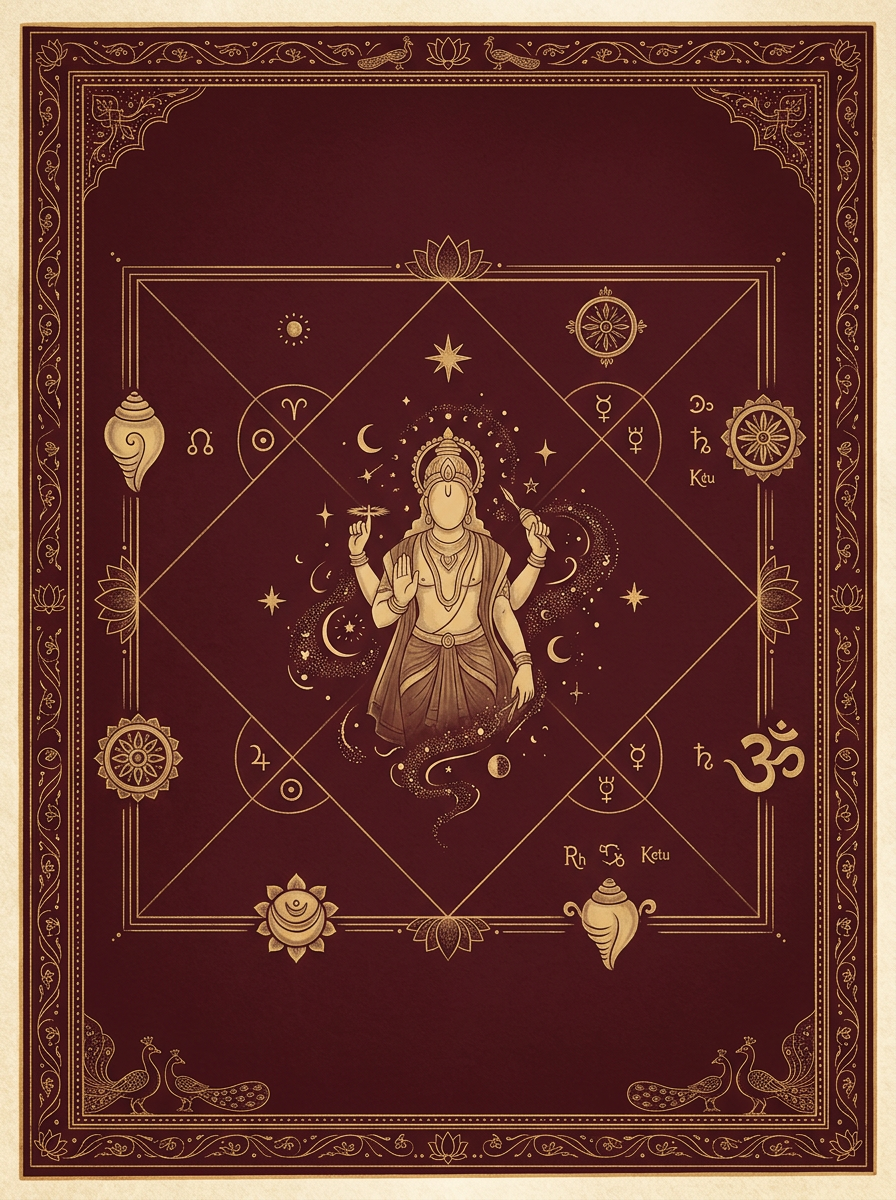
Few terms in Vedic astrology generate as much immediate anxiety as mangal dosh in kundli matching. Over the years at my Noida practice, I have lost count of the number of worried parents and distressed young professionals who walk into my office believing that a single planetary placement has marked their relationship for struggle.
Astrology was never meant to be a tool of intimidation. In its purest form, Jyotish is an illuminating science designed to help you understand your energetic constitution, your blind spots, and the natural flow of your temperament. Mars, known as Mangal or Kuja, represents our vitality, drive, ambition, courage, and how we handle friction. When Mars occupies specific houses in your horoscope, it creates what classical texts describe as Kuja Dosha or Manglik Dosha.
In this comprehensive guide, I want to strip away the centuries of superstition, fear-mongering, and commercial exaggeration that surround this placement. We will explore how Mars truly behaves, how its placement shapes your approach to relationships, when the dosha naturally dissolves, and which practical, authentic remedies bring long-term peace.
What is Manglik Dosha in Vedic astrology?
To understand Mangal Dosha, you must first understand the fundamental nature of Mars. In classical Sanskrit texts, Mars is regarded as the commander-in-chief (Senapati) of the planetary cabinet. It carries the element of fire (Tejas), raw kinetic power, and unyielding assertiveness. Mars is what allows you to overcome obstacles, defend your boundaries, and pursue your goals without hesitation.
However, marital life requires cooperation, vulnerability, softness, and patient compromise—qualities traditionally governed by Venus and Jupiter. When the aggressive, fiery energy of Mars directly touches the houses governing domestic peace, physical intimacy, mutual communication, and partnership, it can introduce friction, impatience, or an unintentional desire to dominate the dynamic.
Classical authorities like Maharishi Parashara note that Manglik Dosha is formed when Mars is placed in the 1st, 4th, 7th, 8th, or 12th house from the Ascendant (Lagna). In the South Indian tradition, the 2nd house is also prominently included because it rules family harmony, speech, and shared domestic values. Furthermore, seasoned practitioners examine these placements not just from the Lagna, but also from the Moon (governing the mind) and Venus (governing matrimonial bliss).
If you are uncertain whether your birth chart contains this combination, you can quickly generate your baseline chart using our free kundli tool to locate the exact house placement of your Mars.
Which houses create Mangal Dosh and why?
Every house in your birth chart represents specific arenas of life. Mars casts special planetary aspects (Drishti) onto the 4th, 7th, and 8th houses from its own position. Because of these unique aspects, whenever Mars sits in any of the sensitive relationship houses, its fiery gaze reaches across the chart to influence other critical areas of domestic stability.
Here is a detailed breakdown of why these specific houses are considered when evaluating Mangal Dosha:
| House Placement | Primary Area Governed | Why Mars Creates Sensitivity Here | Key Aspect Targets |
|---|---|---|---|
| 1st House (Lagna) | Self, temperament, vitality | Imparts a fiery, assertive personality; creates strong expectations of leadership; casts a direct 7th aspect onto the house of marriage. | 4th, 7th, 8th houses |
| 2nd House (Kutumb) | Speech, family wealth, domestic harmony | Can create sharp, unfiltered speech (Vak) during arguments; creates tension within extended family relations. | 5th, 8th, 9th houses |
| 4th House (Sukha) | Domestic happiness, mental peace, home | Agitates the peaceful atmosphere of the domestic home; creates restlessness and emotional volatility under your own roof. | 7th, 10th, 11th houses |
| 7th House (Kalatra) | Partnership, spouse, public interaction | Mars sits directly in the house of the partner, leading to power struggles, quick temper, or an overwhelming dynamic with the spouse. | 10th, 1st, 2nd houses |
| 8th House (Mangalya) | Longevity of the bond, hidden reserves, in-laws | Creates sudden friction, intense emotional transformations, and potential misunderstandings with the spouse's family. | 11th, 2nd, 3rd houses |
| 12th House (Shayana Sukha) | Bed comforts, private life, expenditures | Brings restlessness to the private sphere, differences in physical rhythms, and unexpected household financial strains. | 3rd, 6th, 7th houses |
When Mars resides in any of these stations, the person naturally approaches life with a high-octane drive. In a solitary pursuit or a demanding career, this placement produces an exceptional leader. In a delicate marital partnership, however, that same unrelenting momentum requires conscious tempering.
What are the real psychological and energetic effects of Mars in marriage?
In my consultations, clients often arrive expecting me to tell them that Manglik Dosha brings dramatic catastrophes. The reality is far more subtle and grounded in psychology. Mars does not create external curses; it manifests internal behavioral patterns that influence daily interactions.
When a strong Mars influences your relationship sector, the real-world effects typically manifest as:
- A need for autonomy: Manglik individuals usually possess an innate desire to control their personal space, schedule, and decisions. If a partner attempts to micromanage them, Mars reacts with immediate resistance.
- Direct and unvarnished communication: Where other placements might seek diplomacy or passive agreement, a Mars-influenced individual prefers absolute frankness. While honesty is a virtue, excessive bluntness can hurt a sensitive spouse.
- Impatience with indecision: Mars thrives on action. A Manglik partner may become easily irritated if daily household decisions, financial planning, or career moves linger without resolution.
- High physical and mental energy: Mars natives require constructive outlets. If their career or physical routine does not absorb their surplus vitality, that restlessness frequently spills over into marital debates.
When both partners understand these underlying drivers, what was once perceived as a dreadful flaw transforms into a manageable character trait that can be channeled constructively.
Anshik vs Purna Manglik: What is the true difference?
One of the most confusing areas for families is the distinction between Anshik Manglik (partial or mild) and Purna Manglik (complete or high manglik dosha). Much of this terminology has been popularized by modern software, yet it rests on sound classical principles.
In classical evaluation, we look at the strength of Mars from three distinct reference points:
- Lagna Kundli (Ascendant): Represents physical reality and overall life direction.
- Chandra Kundli (Moon Chart): Represents emotional responses and psychological comfort.
- Shukra Kundli (Venus Chart): Represents romantic compatibility and sensual harmony.
If Mars occupies a sensitive house from only the Lagna or only the Moon, the dosha is generally categorized as Anshik. The intensity is moderate and easily handled through conscious awareness and simple lifestyle alignments.
However, if Mars sits in a sensitive house simultaneously from the Lagna, the Moon, and Venus, or if it is heavily afflicted by other natural malefics like Rahu or Saturn without any soothing aspect from Jupiter, it is classified as Purna Manglik. This does not mean marriage is unfeasible; it simply means that compatibility matching must be performed with much greater care and depth.
Does Mangal Dosh automatically cancel out in your chart?
There is a crucial principle that many amateur astrological assessments overlook: classical scriptures provide dozens of manglik dosha cancellation rules (Pariharas). In fact, in my experience reviewing thousands of birth charts, nearly 60 to 70 percent of charts that initially show Mangal Dosh actually possess a valid cancellation.
Here are some of the most reliable classical cancellations:
1. Mars in its Own or Exaltation Sign
If Mars is placed in Aries, Scorpio (its own signs), or Capricorn (its exaltation sign), the dosha is largely neutralised. A dignified Mars behaves like a disciplined soldier rather than an erratic aggressor. Its energy becomes protective, supportive, and noble.
2. The Mitigating Aspect of Benefics
If Mars is conjunct with or aspected by a strong, unafflicted Jupiter (Guru) or Venus (Shukra), its harsh edges are smoothed out. The grace and wisdom of Jupiter cool the fiery temperament of Mars, transforming aggression into principled leadership.
3. Placement in Friendly Signs
Mars in the 2nd house in Gemini or Virgo (ruled by Mercury), or Mars in the 4th house in Taurus or Libra (ruled by Venus), or Mars in the 7th house in Cancer or Capricorn operates under specific constraints that naturally reduce its capacity to disturb marital peace.
4. Dominant Planetary Strength (Shadbala)
If the 7th lord of your chart is exceptionally well-placed, exalted, or placed in an auspicious trine (Trikona), the fundamental strength of the marriage house overrides the minor disruptions caused by a lone Mars.
Before concluding that a chart suffers from an active dosha, these cancellation principles must be methodically applied by a qualified astrologer.
How do astrologers balance Mars energy during Kundli matching?
When two horoscopes are brought together for matching, the primary goal regarding Mars is achieving energetic equilibrium. There is a common traditional rule: "A Manglik should marry a Manglik." While this rule is broadly effective, let us look at why it works.
When two individuals with active Mars placements marry, their kinetic energies match. Neither partner is easily intimidated by the other's intensity; both bring equal passion, directness, and drive to the relationship. The dynamic reaches a natural balance of power.
However, it is a complete misconception that a Manglik can only marry another Manglik. Vedic astrology provides a profound framework known as Papasamyam (the balancing of malefic influences). If Person A has Mars in the 7th house, but Person B has Saturn, Rahu, or the Sun positioned in an equivalent sensitive house (such as the 1st, 7th, or 8th), the total malefic weight balances out. The relationship achieves stability because both charts carry an equal measure of grounding, mature karma.
During a comprehensive compatibility analysis, we also evaluate the Navamsha (D9) chart. If Mars is fiery in the main birth chart (D1) but softens in the Navamsha by occupying a sign ruled by Jupiter or Mercury, its disruptive potential during married life is minimal.
What are the proven, working remedies for Manglik Dosha?
When Mars energy requires calming or realignment, Vedic tradition offers authentic, time-tested remedies. I do not recommend elaborate, fearful rituals designed to exploit anxiety. Real astrological remedies are structured around discipline, spiritual alignment, and conscious behavioral refinement.
Here are the most effective mangal dosha remedies that have stood the test of tradition:
- Worship of Lord Hanuman and Kartikeya: Lord Hanuman represents the highest, most disciplined expression of Mars energy—courage combined with total devotion and self-control. Reciting the Hanuman Chalisa or Sundarkand on Tuesdays helps direct raw internal fire into constructive patience.
- Chanting the Mangal Beej Mantra: The vibration of the Mars seed mantra (Om Kram Kreem Kroum Sah Bhaumaya Namah) recited 108 times on Tuesdays brings balance to an agitated mental state and soothes erratic planetary influences.
- Kumbh Vivah or Vishnu Vivah: For instances where Mars is intensely afflicted in the 7th or 8th house without any cancellations, traditional texts suggest a symbolic pre-wedding ceremony with a clay pot (Kumbh) or a sacred idol of Lord Vishnu. This symbolic ritual absorbs the primary obstructive transit before the actual human marriage takes place.
- Charitable Offerings (Daan): Donating red lentils (masoor dal), copper utensils, or blood donation on auspicious Tuesdays helps discharge the aggressive karmic debts associated with Mars in a peaceful, life-affirming manner.
- Fasting on Tuesdays: Observing a mindful fast on Tuesdays, consuming simple sattvic meals without salt, trains the nervous system in emotional self-regulation.
- Conscious Communication Practices: No ritual can replace behavioral discipline. A Manglik native should consciously practice the "five-second pause" before responding in moments of domestic disagreement, preventing sharp words that Mars naturally provokes.
Does Mangal Dosh diminish with age or after 28?
One of the most persistent questions I hear in my consultation room is: "Will my Mangal Dosh disappear once I turn 28?"
In classical astrology, every planet possesses a natural age of maturation (Purna Ayu or maturation cycle). Mars matures in a person’s chart at the age of 28. What does this mean in practical terms?
It does not mean that the planet physically moves out of your 7th house on your twenty-eighth birthday. Rather, it signifies that your psychological relationship with that fiery energy undergoes a natural maturation. By age 28, most individuals have navigated early career struggles, gained personal maturity, experienced the consequences of an unbridled temper, and developed the emotional patience necessary to sustain a household.
Therefore, the raw, reactionary edge of Mangal Dosha naturally softens after 28. If a marriage occurs in the late twenties or thirties, the native is far better equipped to channel the drive of Mars toward protecting and building their home rather than clashing over trivial matters.
How should you approach marriage when one partner is Manglik?
If you have fallen in love with someone whose chart is non-Manglik while yours has a strong Mars presence—or vice versa—there is absolutely no reason to panic or abandon hope.
True matchmaking is a nuanced, multi-layered art that looks far beyond a single dosha. Here is how I advise couples to approach this situation:
- Conduct a Complete Chart Audit: Never rely on automated computer match scores. Have a seasoned astrologer verify whether your dosha has underlying cancellations or if the other chart contains equivalent grounding placements.
- Examine the Dasha Periods: Check which planetary periods (Mahadasha and Antardasha) both of you will be running in the upcoming five to ten years. If either partner is entering an auspicious Jupiter, Venus, or well-placed Moon dasha, domestic peace will naturally prevail.
- Cultivate Shared Physical and Creative Outlets: If you carry intense Mars energy, invest in regular physical exercise, sports, outdoor adventures, or shared creative pursuits with your partner. Giving Mars a physical playground keeps it away from the dining room table.
- Commit to Transparency: Mars respects courage and honesty. Build a relationship culture where both partners can voice their grievances immediately, calmly, and without harboring hidden resentment.
Astrology does not write your life in stone; it provides the energetic weather forecast. How you steer your ship through the wind is always determined by your mutual wisdom, respect, and commitment.
If you find yourself navigating complex Kundli matching questions or feeling uncertain about how Mars affects your matrimonial future, I invite you to book a consultation with me at Daivagya. Together, we can review both horoscopes in total depth and provide clear, grounded, and practical guidance tailored to your life.
Frequently asked questions
Can a Manglik person marry a non-Manglik person safely?
Yes, absolutely. A Manglik individual can safely marry a non-Manglik if the dosha contains classical cancellations, if the non-Manglik partner has balancing planetary placements (Papasamyam), or if Jupiter strongly aspects the 7th house. A thorough evaluation of both horoscopes will clarify whether the overall compatibility supports a joyful and enduring partnership.
Is Manglik Dosha always responsible for delays in marriage?
Not necessarily. While an afflicted Mars in the 7th or 8th house can create temporary hesitation or brief hurdles during negotiations, major marriage delays are more frequently caused by the influence of Saturn, Rahu, or a debilitated 7th lord. Mars usually brings impatience or haste rather than prolonged delays.
How do I know if my Manglik Dosha is cancelled?
Manglik Dosha is commonly cancelled if Mars occupies its own sign (Aries, Scorpio), its exaltation sign (Capricorn), or receives a direct aspect from an unafflicted Jupiter or Venus. It also reduces significantly if the 7th lord is exceptionally well-placed in an angle or trine in the birth chart.
Does wearing a Red Coral gemstone remove Mangal Dosh?
No, wearing a Red Coral (Moonga) without proper analysis can actually intensify Mars energy rather than calm it. If Mars is an aggressive malefic placed in your 7th or 8th house, strengthening it with a gemstone can elevate friction. Red Coral should only be worn if Mars is an auspicious functional benefic for your specific Ascendant.
Continue reading
Dev Uthani Ekadashi and Tulsi Vivah 2026 (20-21 November): When the Wedding Season Truly Begins
Discover the spiritual and astrological significance of Dev Uthani Ekadashi and Tulsi Vivah 2026, marking the official opening of the Hindu wedding season.
Kartik Purnima 2026 (24 November): What This Full Moon Means for Married Couples
Discover how Kartik Purnima 2026 influences marital harmony, emotional balance, and shared prosperity, along with traditional rituals and astrological insights.
Chhath Puja 2026 (14-15 November): Strengthening the Sun for Family Wellbeing
Discover how Chhath Puja 2026 offers a sacred window to strengthen the Sun in your birth chart, fostering deep family vitality, dignity, and marital harmony.
Dhanteras 2026 (6 November): Prosperity Rituals for a Newly Married Home
A complete astrological guide to Dhanteras 2026 on 6 November for newly married couples, covering shubh muhurat, auspicious purchases, and joint rituals.
New here? Start with the full guide to Doshas in Marriage Astrology, or try the free kundli tool.
Want your specific situation analysed?
Book a private Marriage & Relationship Consultation with Dr. Rahul Singh — your charts read in detail, with a clear, confidential opinion you can act on.
Limited offer · was ₹7,500 · 60-minute consultation + detailed written analysis