26 October 2026 · Daivagya
Dev Uthani Ekadashi and Tulsi Vivah 2026 (20-21 November): When the Wedding Season Truly Begins
Discover the spiritual and astrological significance of Dev Uthani Ekadashi and Tulsi Vivah 2026, marking the official opening of the Hindu wedding season.
Quick answer
Dev Uthani Ekadashi and Tulsi Vivah in November 2026 mark the conclusion of Chaturmas and the awakening of Lord Vishnu. This sacred transition reopens the Hindu wedding season, providing potent planetary alignments and universally auspicious timings for couples stepping into married life.
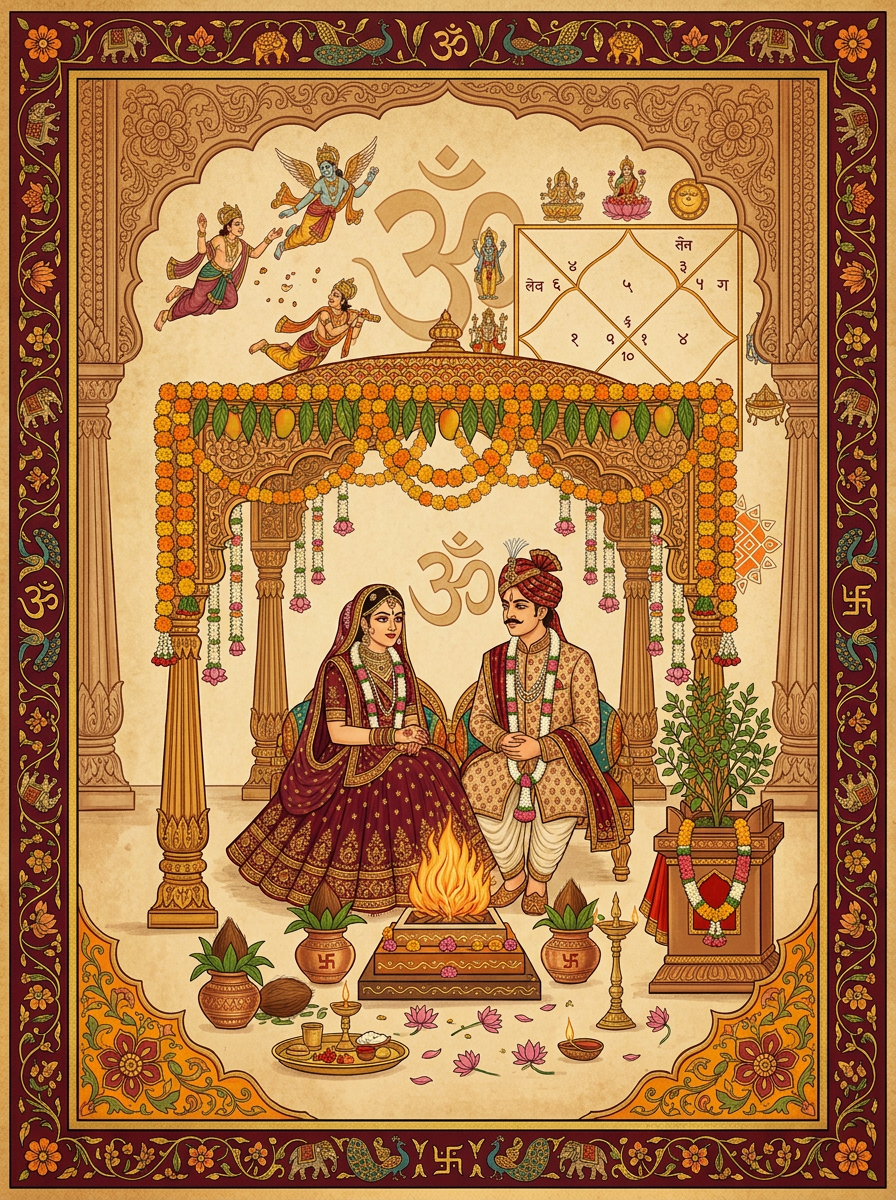
Every year in my Noida practice, as the crisp autumn air settles over northern India in Kartik month, the nature of consultations undergoes a dramatic shift. For four months during Chaturmas, parents and couples often wait patiently, reviewing horoscopes, matching charts, and holding off on celebratory ceremonies. When Dev Uthani Ekadashi 2026 arrives, that period of quiet contemplation transforms into active celebration.
Dev Uthani Ekadashi, also known as Prabodhini Ekadashi or Devutthana Ekadashi, is not merely a date on the panchang. In Vedic tradition, it is the cosmic turning point where divine consciousness reawakens to bless worldly endeavors. Paired immediately with Tulsi Vivah 2026, this sacred period signals to families across the globe that the gates to auspicious marital unions are officially wide open. Understanding the rhythm behind this transition helps you plan your marriage ceremonies with clarity and reverence.
What is Dev Uthani Ekadashi and why does it mark the start of weddings?
To understand why this festival carries such monumental weight in matrimonial timing, we must look at the cosmic calendar. Four months prior, on Devshayani Ekadashi in the month of Ashadha, Lord Vishnu enters Yoga Nidra (a state of deep cosmic meditation). During these four months, known as Chaturmas, all life-affirming, sanctified rites that establish new domestic lineages—such as weddings, sacred thread ceremonies, and housewarmings—are traditionally paused.
On Dev Uthani Ekadashi, which falls on the Shukla Paksha Ekadashi of the Kartik month, Lord Vishnu awakens from his cosmic slumber on the Shesha Naga. In the philosophy of Vedic astrology, Vishnu represents Sthiti—the cosmic principle of sustenance, preservation, and righteous order. Marriage is essentially an institution of sustenance. It requires preservation of family harmony, emotional stability, and moral duty.
When the sustaining energy of the cosmos is metaphorically asleep, establishing a new marital foundation lacks the full, direct blessing of the preserver. Once the deity awakens, divine benevolence flows unhindered into earthly sanskaras. This is why this specific tithi is celebrated as the dawn of the Hindu wedding season.
What are the exact dates and tithi timings for Dev Uthani Ekadashi and Tulsi Vivah in 2026?
In 2026, the cosmic alignment brings Dev Uthani Ekadashi and Tulsi Vivah across the 20th and 21st of November. Calculating precise tithi timings is essential for families scheduling their rituals, fasting periods, and subsequent wedding ceremonies.
Ekadashi Tithi begins in the afternoon hours of November 20, 2026, and extends into the daylight hours of November 21, 2026. Because Vedic calendar traditions prioritize the Udaya Tithi (the tithi prevailing at sunrise) for community fasting and temple celebrations, several traditions celebrate the awakening and formal Tulsi Vivah rituals across these two linked dates.
| Event / Milestone | Calendar Date (2026) | Astrological Significance |
|---|---|---|
| Dev Uthani Ekadashi (Tithi Begins) | 20 November 2026 | Cosmic awakening of Lord Vishnu; fast initiation |
| Prabodhini Ekadashi (Udaya Tithi & Parana) | 21 November 2026 | Breaking of fast; community celebrations |
| Tulsi Vivah (Formal Celebrations) | 20–21 November 2026 | Symbolic wedding of Tulsi and Shaligram; marriage gates open |
| Kartik Purnima (Dev Deepawali) | 24 November 2026 | Culmination of Kartik month auspiciousness |
In practical consultations, I advise families to verify their local sunrise timings, as minor variations across cities can subtly alter the ideal muhurat for performing the home-based Tulsi Vivah.
Why does Lord Vishnu's awakening end the four-month pause on marriages?
Many couples ask me whether the pause during Chaturmas is based on fear or superstition. It is neither. Vedic tradition is deeply attuned to natural and psychological cycles. Chaturmas coincides with the monsoon season across the Indian subcontinent. Historically, travel was treacherous, disease was rampant, and agrarian communities needed to focus entirely on sowing crops and maintaining health.
On a subtler astrological level, the Sun transits through Cancer, Leo, Virgo, and Libra during these months. These signs represent shifts from personal preservation to seasonal shifts where physical vitality and sattvic clarity require disciplined internal conservation rather than outward social celebrations.
When the Sun moves through Scorpio and Jupiter radiates positive cosmic rays into the autumn skies, natural energies stabilize. The awakening of Vishnu symbolizes the restoration of balance, vitality, and external activity. Marriage demands social gatherings, physical travel, abundant food, and joyous exchange. Thus, waiting for Dev Uthani Ekadashi ensures that both cosmic forces and earthly environments support the health and prosperity of the newlyweds.
What is the astrological and spiritual significance of Tulsi Vivah?
Tulsi Vivah is the ceremonial marriage of the sacred Tulsi plant (Holy Basil, representing Goddess Lakshmi or Vrinda) with the Shaligram stone or an idol of Lord Vishnu (representing Shri Krishna or Narayana). This ritual is performed either on the evening of Dev Uthani Ekadashi itself or on the following Dwadashi tithi.
Spiritually, Tulsi represents pure devotion (bhakti), selflessness, and emotional resilience. Shaligram represents unwavering righteousness, steadfastness, and cosmic protection. When these two energies unite, it symbolizes the ideal harmony of a successful marriage: emotional dedication balanced by structural stability.
Astrologically, Tulsi is associated with the benevolent, healing qualities of Mercury and Jupiter, while Vishnu embodies the stabilizing light of pure Sattva. The union of these forces cleanses negative atmospheric vibrations, resolves minor ancestral imbalances (pitru doshas), and infuses the home with domestic peace (griha shanti). Performing or participating in a Tulsi Vivah allows couples to absorb these balancing vibrations before their own weddings.
How does Tulsi Vivah act as an Abujha Muhurat for challenging horoscopes?
In classical jyotish, certain days are categorized as Abujha Muhurats or Swayamsiddha Muhurats—times so inherently pure that they do not require exhaustive planetary filtering for general auspicious tasks. Dev Uthani Ekadashi and Tulsi Vivah hold a revered place among these self-proven windows.
In my practice, I frequently encounter couples who experience scheduling bottlenecks. Perhaps an ideal personalized date does not align with extended family availability, or minor afflictions create hesitation. While severe chart discordances still require careful evaluation using our free kundli tool, the day of Tulsi Vivah acts as a broad cosmic umbrella.
- It neutralizes minor doshas arising from lunar day transitions.
- It offers an inherently sanctified setting for couples conducting court registrations, ring ceremonies, or formal commitment declarations.
- It serves as a spiritually charged day for couples initiating pre-wedding remedies and Grah Shanti rituals.
- It provides families with an undeniable feeling of spiritual security when beginning their wedding shopping and printing invitations.
While a completely customized vivah muhurat tailored to both individual birth charts is always the gold standard, the spiritual aura of Tulsi Vivah minimizes negative environmental influences better than ordinary days.
What planetary transits define the post-Dev Uthani marriage season in late 2026?
Every wedding season has its own unique planetary flavor dictated by the transits of Jupiter (Guru), Venus (Shukra), and the Sun (Surya). In late November 2026, the planetary canvas presents exceptionally interesting configurations for couples tying the knot.
Jupiter, the significator of wisdom, longevity, and marital grace for women, moves through supportive zones, casting its benevolent aspect over key houses of partnership. Venus, the planet of love, physical harmony, and aesthetic joy, remains radiant and free from combustion (Shukra Tara Asth) during significant stretches of this winter window.
When both Jupiter and Venus are direct, uncombust, and well-aspected, the foundation for long-term domestic compatibility is exceptionally sturdy. The period immediately following November 21, 2026, initiates a dense calendar of wedding dates across November and December, prior to the Sun's transit into Sagittarius (Dhanu Sankranti), which introduces the traditional mid-winter pause known as Kharmas.
How should families perform the Tulsi Vivah ritual at home to invite marital blessings?
You do not need an elaborate temple setup to invite the sacred energy of Tulsi Vivah into your home. A sincere, traditional ritual performed by the family creates a powerful sanctum of domestic peace. Over the years, I have recommended this simple, authentic procedure to many couples preparing for their upcoming nuptials:
- Prepare the Courtyard or Mandir: Clean the area around your Tulsi plant thoroughly. Decorate the Tulsi pot with fresh geru (red ochre), turmeric, and sandalwood paste.
- Establish the Divine Seats: Place the Shaligram shila, an idol of Lord Vishnu, or a Krishna deity on a raised wooden chowki to the right of the Tulsi plant. Drape the deity in yellow cloth and the Tulsi plant in a bright red or pink chunri.
- Perform the Holy Bath and Adornment: Bathe the Shaligram with panchamrit and pure water. Offer fresh sugarcane stalks, seasonal fruits, water chestnuts (singhara), and amla around the base of the plant.
- The Sacred Knot (Gathbandhan): Tie a sanctified yellow cotton thread or a silk scarf connecting the Shaligram and the Tulsi plant, symbolizing their unbreakable union.
- Exchange of Vows and Aarti: Recite the Vishnu Sahasranama or simple Krishna mantras, offer the Mangal Aarti, and circumambulate (parikrama) the sacred pair four times while praying for the removal of obstacles in your family's marital journeys.
Sharing the prasad of raw sugar, amla, and fruits among family members seals the ritual with sweetness and collective goodwill.
What astrological checks should you complete before locking your winter wedding date?
While Dev Uthani Ekadashi signals the green light for the wedding season at large, individual couples must still exercise personalized diligence. A universal opening of the season does not mean every date within that season suits every individual birth chart.
Before you finalize banquet halls and send out wedding cards, here is the structured checklist I recommend to every family during an astrological review:
- Verify Shukra and Guru Bal: Ensure that Jupiter and Venus are strong and uncombust on your selected date, particularly relative to the bride's and groom's Moon signs.
- Check for Surya and Chandra Shuddhi: Confirm that the Sun and Moon are transiting favorable houses from your natal Moon sign (avoiding the 4th, 8th, or 12th houses where possible).
- Assess the Tribala Shuddhi: In traditional North and South Indian systems, balancing the solar, lunar, and Jupiter strengths ensures physical health, emotional calm, and enduring progeny.
- Avoid Inauspicious Lagnas: Ensure the wedding ascendant (Vivah Lagna) is free from malefic placement in the 7th or 8th house at the exact hour of the pheras.
- Identify Personal Kartari Yoga: Check that no severe malefic planets hem the marriage lagna or the natal 7th house during the time of the wedding vows.
If you find these calculations overwhelming or if you face conflicting opinions from different family pandits, it is always wise to book a consultation with an experienced astrologer who can calculate personalized, harmonious dates for both families.
The deeper emotional message of Dev Uthani Ekadashi for modern couples
In our modern, fast-paced world, the deeper meaning behind festivals often gets buried under event management logistics, venue bookings, and social media planning. Yet, Dev Uthani Ekadashi holds a profoundly practical lesson for anyone embarking on married life.
The ritual awakening of divine consciousness reminds us that a successful marriage is not an unconscious, automatic enterprise. It requires conscious attention, deliberate presence, and continuous care. Just as the cosmic energy is awakened through prayer and commitment, two partners must remain awake to each other's emotional, spiritual, and physical needs.
When you plan your wedding around these sacred rhythms, you align your personal life story with time-tested cosmic cycles. Dev Uthani Ekadashi and Tulsi Vivah in 2026 present a magnificent window to begin this sacred chapter with confidence, joy, and deep-seated peace.
Frequently asked questions
Can we get married on Dev Uthani Ekadashi without matching our kundlis?
Dev Uthani Ekadashi is an extraordinarily auspicious day that minimizes minor panchang doshas, but it does not erase fundamental personality or psychological mismatches. Checking birth chart compatibility ensures emotional balance, longevity, and mutual respect, which are personal to the couple and independent of the day's universal purity.
What if Tulsi Vivah falls on two consecutive days in 2026?
Because Ekadashi Tithi spans November 20 and 21 in 2026, some regional traditions observe the fast on the 20th and conclude the Tulsi Vivah on the Dwadashi morning of the 21st. Both days are spiritually auspicious; follow your family's regional tradition or local sunrise calendar.
Why are weddings prohibited during the four months before Dev Uthani Ekadashi?
During Chaturmas, Lord Vishnu is believed to be in cosmic rest, and environmental conditions historically required internal discipline rather than grand celebrations. Astrologically, planetary transits during this period are less conducive to initiating life-long domestic institutions like marriage, making a pause spiritually sound.
Can unmarried individuals perform Tulsi Vivah for marriage obstacles?
Yes. Unmarried men and women facing delays or seeking a compatible partner often participate in or sponsor Tulsi Vivah rituals. Tradition holds that offering prayers during this divine union calms afflicted 7th house influences and cultivates the emotional readiness needed for a stable relationship.
Continue reading
Kartik Purnima 2026 (24 November): What This Full Moon Means for Married Couples
Discover how Kartik Purnima 2026 influences marital harmony, emotional balance, and shared prosperity, along with traditional rituals and astrological insights.
Chhath Puja 2026 (14-15 November): Strengthening the Sun for Family Wellbeing
Discover how Chhath Puja 2026 offers a sacred window to strengthen the Sun in your birth chart, fostering deep family vitality, dignity, and marital harmony.
Dhanteras 2026 (6 November): Prosperity Rituals for a Newly Married Home
A complete astrological guide to Dhanteras 2026 on 6 November for newly married couples, covering shubh muhurat, auspicious purchases, and joint rituals.
Ahoi Ashtami 2026 (1 November): The Kartik Vrat Families Keep for Children and Family Peace
Discover the significance, timings, and astrological remedies of Ahoi Ashtami 2026 on 1 November for your children's well-being and lasting family peace.
New here? Start with the full guide to Vivah Muhurat: Choosing the Right Wedding Date, or try the free kundli tool.
Want your specific situation analysed?
Book a private Marriage & Relationship Consultation with Dr. Rahul Singh — your charts read in detail, with a clear, confidential opinion you can act on.
Limited offer · was ₹7,500 · 60-minute consultation + detailed written analysis