19 October 2026 · Daivagya
Chhath Puja 2026 (14-15 November): Strengthening the Sun for Family Wellbeing
Discover how Chhath Puja 2026 offers a sacred window to strengthen the Sun in your birth chart, fostering deep family vitality, dignity, and marital harmony.
Quick answer
Chhath Puja 2026 falls on 14 and 15 November for the primary Arghya offerings to the setting and rising Sun. Astrologically, this sacred four-day festival harnesses profound solar energy to strengthen vitality, dissolve lineage afflictions, protect progeny, and restore mutual dignity within the household.
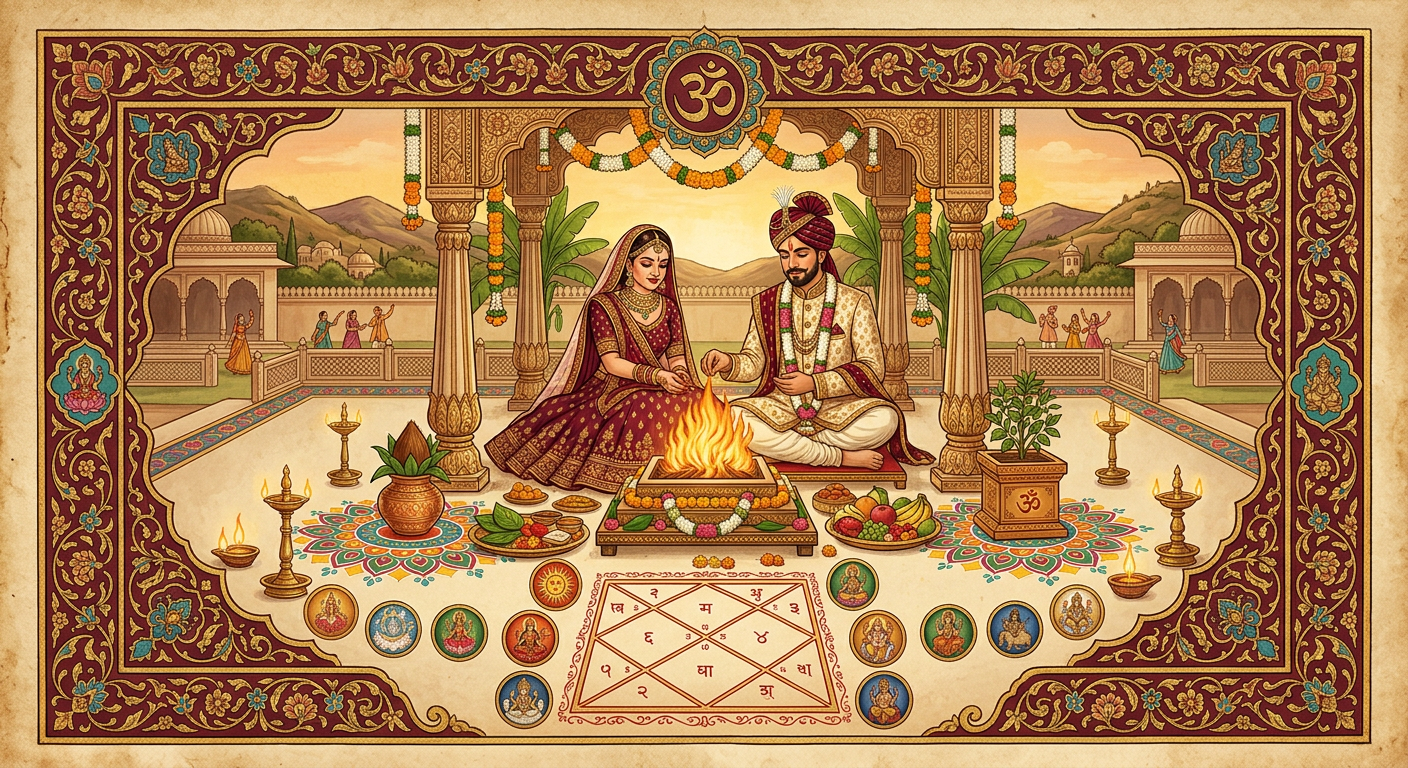
Every year in my Noida practice, as the crisp autumn air settles over northern India in the month of Kartik, I notice a quiet transformation among the families who visit me. Conversations shift from everyday anxieties to the sanctity of the upcoming Mahaparv. Chhath Puja is not merely a regional festival; it is one of the most rigorous, scientifically grounded, and spiritually potent solar rituals preserved within Vedic civilization.
In Vedic astrology, the Sun (Surya) represents the Atman—the eternal soul, the core identity, vitality, personal dignity, and the foundational strength of the family lineage. When we observe Chhath Puja 2026, scheduled across the four days culminating on 14 and 15 November, we participate in a direct cosmic alignment designed to purify the physical body and balance the solar energy across our domestic life. When you understand the deeper astrological mechanics behind this sacred ritual, its capacity to heal family friction, bless progeny, and establish peace in the home becomes profoundly clear.
What makes Chhath Puja 2026 such an astrologically potent window?
Chhath Puja takes place starting on Kartik Shukla Chaturthi and concludes on Kartik Shukla Saptami, with the primary offerings centered on Shashthi (the sixth lunar day). Astrologically, the transit of the Sun through Libra and into Scorpio during this late-autumn phase marks a sensitive energetic transition. During this time, cosmic solar rays penetrate the Earth's atmosphere at a distinct angle that carries deep purifying qualities, especially during twilight and dawn.
The sixth lunar day is ruled by Kartikeya and closely linked with Chhathi Maiya—identified in Vedic scriptures as Devi Devasena, the cosmic energy of nature and the divine protector of children and lineage. When solar radiation interacts with water bodies during these specific sunrise and sunset intervals, the human bio-field naturally absorbs high-frequency prana.
In my practice, I often remind seekers that Vedic astrology never views planetary bodies as distant inert rocks. They are living conscious principles. By offering gratitude to Surya Bhagwan while standing in living water, you physically and karmically align your personal aura with cosmic order, which actively supports strengthening the Sun in astrology without the need for expensive synthetic remedies.
Why does the Sun hold the key to family stability and marital dignity?
Many people mistakenly assume that relationship harmony is governed solely by Venus or Jupiter. While Venus provides romantic affection and Jupiter brings wisdom and marital longevity, the Sun governs something equally foundational: mutual respect, self-worth, and the presence of pure intentions between partners. Without a well-placed or balanced Sun, relationships often suffer from subtle passive aggression, fragile egos, lack of mutual appreciation, and instability within the extended household.
When the Sun is troubled in a chart—whether through debilitation, harsh aspects from Saturn or Rahu, or placement in adverse houses—we frequently see specific behavioral patterns emerge:
- Constant struggles over authority and decision-making within the marriage.
- Unresolved misunderstandings between the couple and their respective parents or elders.
- Persistent fatigue, low confidence, and a feeling that despite hard work, the family never receives due recognition.
- Difficulties in conceiving or chronic worries regarding the health and developmental progress of children.
Worshipping the Sun through authentic austerity removes the Tamasic (sluggish, resentful) qualities from the home atmosphere. It burns away the petty grievances that build up between family members, replacing wounded pride with mature, self-assured benevolence.
What are the exact dates and muhurat timings for Chhath Puja 2026?
To derive the full spiritual and astrological benefit of the festival, timing is essential. The festival spans four distinct phases, each carrying its own energetic purpose.
| Day | Date | Phase | Astrological & Ritual Focus |
|---|---|---|---|
| Day 1 | 12 November 2026 | Nahay Khay | Purification of the physical body and kitchen; intake of pure Satvik food. |
| Day 2 | 13 November 2026 | Kharna (Lohanda) | 36-hour Nirjala fast begins at sunset; Rasi and Nakshatra alignment for inner focus. |
| Day 3 | 14 November 2026 | Sandhya Arghya | Offering water and milk to the setting Sun (Pratyusha); releasing past baggage. |
| Day 4 | 15 November 2026 | Usha Arghya & Paran | Offering Arghya to the rising Sun (Usha); absorbing life vitality and concluding the fast. |
On the evening of 14 November 2026, the sunset window for Sandhya Arghya occurs around 17:28 IST (depending on your specific geographic coordinates). On the morning of 15 November 2026, the sunrise window for Usha Arghya begins around 06:44 IST. Participating in these exact windows allows you to harness the direct solar spectrum when ultraviolet and infrared rays are at their most therapeutic balance.
How does Chhath Puja differ from regular solar remedies?
Most remedies for a weak Sun—such as wearing a natural ruby, reciting basic mantras, or donating copper—are passive or individualistic. Chhath Puja is uniquely communal, intensely ascetic, and non-hierarchical. There is no requirement for elaborate intermediary rituals; the devotee (vrati) stands directly before the visible deity, Surya Dev, immersed in natural water.
What makes this ritual extraordinary is the intentional worship of both the setting and rising Sun. In conventional daily life, society only celebrates rising power, success, and dawn. In Chhath, the evening Arghya comes first. By bowing to the setting Sun, the vrati acknowledges the quiet periods of life, the inevitable cycles of rest, aging, and decline, honoring the cosmic law that what sets must rise again.
In my experience analyzing generational charts, families that maintain the tradition of Chhath Puja carry a distinct psychological resilience. Even during severe transits of Saturn (such as Sade Sati) or during difficult Rahu Mahadashas, these households demonstrate a rooted dignity and an innate ability to bounce back from financial or domestic setbacks.
How can you identify if the Sun needs strengthening in your Kundli?
Before undertaking deep solar vows or assuming your chart carries a solar affliction, it is always wise to assess your planetary positions accurately. You can generate your complete birth chart using our free kundli tool to check where the Sun is positioned by sign, house, and nakshatra.
From a practical diagnostic standpoint, here are the core chart indicators that suggest you would benefit immensely from dedicated Surya worship for family harmony:
- Debilitated Sun (Neecha Surya): The Sun placed in Libra (Tula Rasi), particularly in the deep debilitation degrees of Swati Nakshatra, where self-worth often wavers.
- Solar Eclipse Combinations (Grahan Dosha): Sun closely conjunct Rahu or Ketu in the 1st, 5th, 7th, 9th, or 10th house, causing sudden drops in reputation or friction with father figures.
- Sun in the 6th, 8th, or 12th House: Where the solar fire can either feel suppressed or express itself through chronic exhaustion and hidden internal anxiety.
- Sun-Saturn Conjunction or Mutual Aspect: A classic signature of heavy family responsibility, delayed recognition, and generational friction between parent and child.
When any of these combinations exist, the native often struggles to establish healthy boundaries in relationships. They may swing between overbearing control and complete submissiveness. The disciplined, cooling water-rites of Chhath serve as a profound counterbalance to these planetary afflictions.
How does solar energy affect progeny and the wellbeing of children?
In classical Parashari astrology, the 5th house governs intelligence (Dhi), past-life merit (Purva Punya), and children (Santan Bhava). The natural ruler of the cosmic 5th house is Leo (Simha), ruled entirely by the Sun. Therefore, the vitality, moral integrity, and long-term health of one's children are directly linked to the strength of the solar principle in the parental charts.
Chhathi Maiya is specifically revered as the eternal mother who protects newborns, eases developmental milestones, and grants longevity to the lineage. During the festival, the offerings of freshly harvested produce—such as sugarcane, thekua made from whole wheat and jaggery, fresh coconuts, turmeric roots, and seasonal fruits—are placed in bamboo winnows (soop) and dedicated to the cosmic source of life.
I have observed countless instances where couples facing persistent anxieties regarding their children's stability, education, or general health find remarkable mental peace and grounded clarity after adopting the worship of Chhathi Maiya and Surya Dev. The ritual harmonizes the 5th and 9th house axes in the family dynamic, fostering mutual respect between generations.
What specific rituals can families perform if they cannot keep the full fast?
The full 36-hour Nirjala fast of Chhath is physically demanding and should only be undertaken if one's physical health, family capacity, and inner resolve permit. However, the spiritual and astrological benefits of this sacred period are accessible to every member of the family through supportive, sincere practices.
If you are unable to observe the complete vow yourself, here is a practical approach you can adopt during 14–15 November 2026:
- Assist a Vrati: In traditional understanding, helping someone perform Chhath—by cleaning the ghats, preparing the Prasad in spotless Satvik conditions, or carrying the Arghya basket—confers equal spiritual merit.
- Practice the Sandhya and Usha Arghya at Home: If you cannot reach a river or pond, fill a clean copper vessel (Tambra Patra) with fresh water, add a pinch of red kumkum, whole raw rice (Akshat), and red flowers. Stand facing West during the sunset of 14 November and offer water slowly while chanting the Gayatri Mantra or Om Suryaya Namaha. Repeat facing East during sunrise on 15 November.
- Recite the Aditya Hridaya Stotram: Derived from the Yuddha Kanda of the Valmiki Ramayana, this hymn was imparted by Sage Agastya to Lord Rama to awaken unwavering clarity and strength. Reciting it on these two days brings immediate mental focus and calms erratic anxieties.
- Perform Solar Charity (Surya Daan): Donate whole wheat flour, natural dark jaggery, copper utensils, or warm clothing to those in genuine need on Sunday morning following the Usha Arghya.
How does worshipping both the setting and rising Sun heal marital relationships?
There is a profound psychological lesson embedded within Chhath that directly benefits modern marriages. Most interpersonal conflicts between husband and wife arise because partners cling to unrealistic expectations of permanent perfection, constant excitement, and unending validation.
By honoring the setting Sun (Sandhya Arghya), you symbolically accept the natural downtimes in your relationship—the phases where patience, silence, endurance, and mutual space are required. You acknowledge that every difficult conversation or period of emotional distance is simply a transition, not an end.
When you subsequently stand in the water before dawn to greet the rising Sun (Usha Arghya), you invite a fresh dawn of mutual understanding, commitment, and vitality into your bond. It resets the marriage by removing accumulated bitterness. In my Noida consultations, I encourage couples to participate in morning solar offerings together whenever possible; standing side by side in silent gratitude before nature creates an unspoken emotional grounding that words often fail to achieve.
If your chart carries complex placements or you are navigating significant periods of family stress, exploring your planetary periods in depth can illuminate the precise root of the challenge. You are always welcome to book a consultation for a structured, confidential discussion on your family's astrological timing and remedies.
Frequently asked questions
Can someone observe Chhath Puja if the Sun is placed in a difficult house?
Yes, absolutely. Chhath Puja is a universal restorative ritual, not a harmful one. Individuals with a debilitated Sun or challenging placements in the 6th, 8th, or 12th house often benefit the most. The gentle, water-based nature of the Arghya harmonizes harsh solar energy, transforming internal friction into calm vitality without causing any adverse planetary side effects.
What is the significance of offering Arghya in a copper vessel?
Copper is the primary metal governed by the Sun in Vedic alchemy. When water is held in a pure copper vessel and offered under the morning sun rays, the light refracts through the stream directly onto the practitioner's heart and forehead chakras. This process helps balance the nervous system, stimulates mental focus, and calms an agitated mind.
Does Chhath Puja specifically help with child-related worries in a horoscope?
Yes. The worship of Chhathi Maiya (Devi Devasena) on the sixth lunar day (Shashthi) is traditionally dedicated to the safety, longevity, and spiritual upliftment of children. Astrologically, this aligns with strengthening the 5th house of progeny and clearing ancestral burdens that may be causing unnecessary delays or anxieties regarding family growth.
How does Chhath Puja differ for those living in apartments or cities away from rivers?
While traditional ghats along clean water bodies are ideal, devotion and purity of intent take precedence. Many urban families successfully observe the ritual on clean rooftops or open balconies using large clean tubs filled with fresh water. What matters most is standing in clean standing water during the precise solar dawn and dusk muhurats.
When should one consult an astrologer before undertaking major solar vows?
If you are planning to take a lifelong vow (such as starting the Nirjala Chhath fast, which is traditionally never broken once begun), it is wise to consult an astrologer. An expert can examine your physical constitution, Mahadasha timing, and family lineage indicators to ensure you undertake the commitment with total harmony and auspicious timing.
Continue reading
Dev Uthani Ekadashi and Tulsi Vivah 2026 (20-21 November): When the Wedding Season Truly Begins
Discover the spiritual and astrological significance of Dev Uthani Ekadashi and Tulsi Vivah 2026, marking the official opening of the Hindu wedding season.
Kartik Purnima 2026 (24 November): What This Full Moon Means for Married Couples
Discover how Kartik Purnima 2026 influences marital harmony, emotional balance, and shared prosperity, along with traditional rituals and astrological insights.
Dhanteras 2026 (6 November): Prosperity Rituals for a Newly Married Home
A complete astrological guide to Dhanteras 2026 on 6 November for newly married couples, covering shubh muhurat, auspicious purchases, and joint rituals.
Ahoi Ashtami 2026 (1 November): The Kartik Vrat Families Keep for Children and Family Peace
Discover the significance, timings, and astrological remedies of Ahoi Ashtami 2026 on 1 November for your children's well-being and lasting family peace.
Want your specific situation analysed?
Book a private Marriage & Relationship Consultation with Dr. Rahul Singh — your charts read in detail, with a clear, confidential opinion you can act on.
Limited offer · was ₹7,500 · 60-minute consultation + detailed written analysis