16 October 2026 · Daivagya
Dhanteras 2026 (6 November): Prosperity Rituals for a Newly Married Home
A complete astrological guide to Dhanteras 2026 on 6 November for newly married couples, covering shubh muhurat, auspicious purchases, and joint rituals.
Quick answer
Dhanteras 2026 falls on Friday, 6 November, presenting a rare alignment under Venus that offers newly married couples an exceptional window for joint prosperity rituals. Performing the Pradosh Kaal Lakshmi-Kuber puja and purchasing brass, silver, or kitchen essentials together stabilizes household wealth, strengthens mutual harmony, and invokes long-term domestic peace.
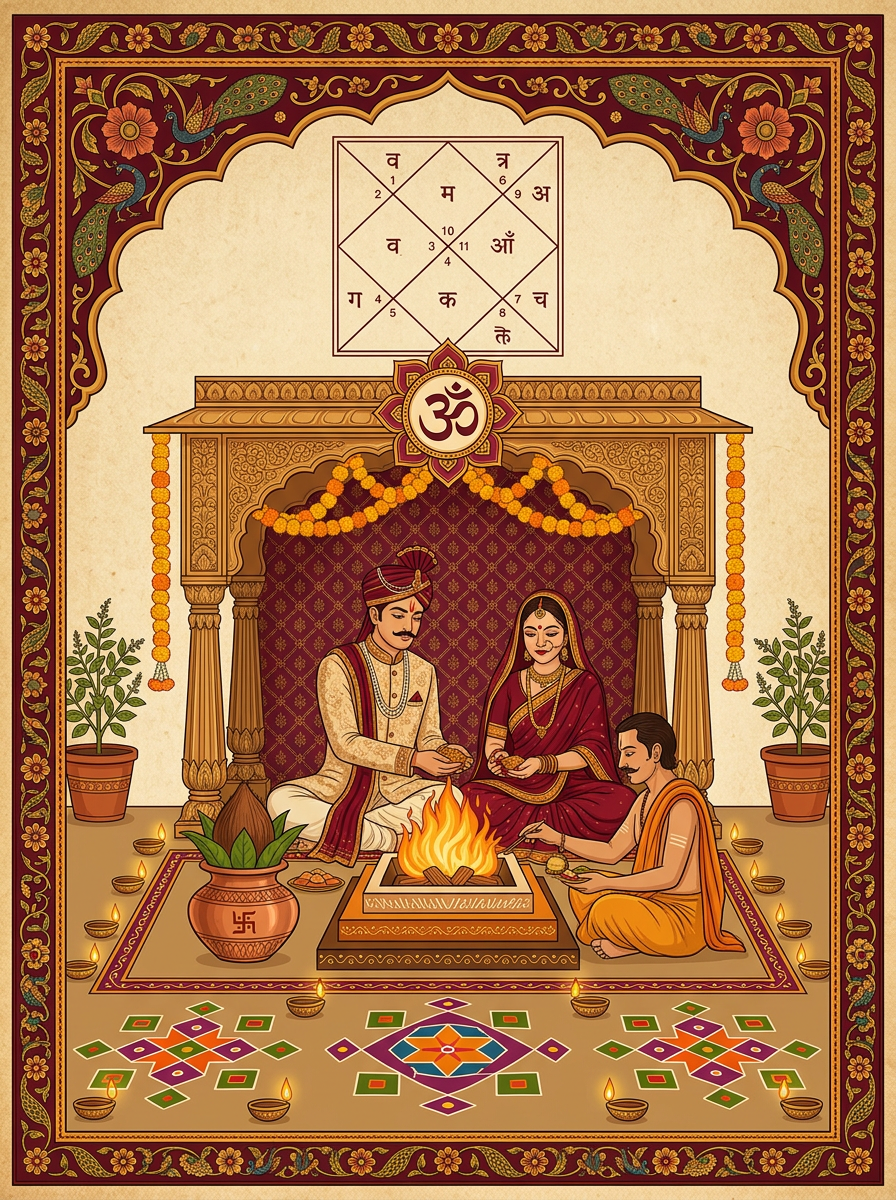
In my practice in Noida, I often remind couples that a wedding ceremony creates a sacred union, but the first year of domestic life anchors its energy. When the festival of lights arrives, the very first celebration—Dhantrayodashi or Dhanteras—serves as the foundational cornerstone for your joint household. For a newly married couple, celebrating your first Dhanteras after marriage is far more than a routine shopping trip for utensils or gold; it is an ancient, conscious alignment of your shared karma, your home's physical vibrations, and your combined financial destiny.
On Friday, 6 November 2026, the cosmic landscape presents an exceptionally graceful combination. Dhanteras falling on a Friday—the day governed by Shukra (Venus), the planet of marital bliss, refined taste, and material prosperity—amplifies the blessings of Mahalakshmi and Lord Dhanvantari. In this guide, I want to walk you through the astrological significance, the exact timings, the traditional purchases, and the step-by-step rituals designed to turn your new living space into a sanctuary of health, mutual respect, and lasting abundance.
Why is your first Dhanteras together so astrologically significant?
In Vedic astrology, your birth chart does not operate in isolation once you marry. When two people unite, their 2nd house (family assets, speech, and accumulated wealth), 4th house (domestic peace and the emotional comfort of the home), and 11th house (gains and aspirations) begin to interact. I have seen countless charts where an individual's financial growth accelerated only after their shared household energy stabilized. Dhanteras is the exact energetic juncture in the Vedic calendar where you consciously invite Sthir Lakshmi—wealth that stays, nurtures, and brings peace rather than anxiety.
Historically, Dhanteras honors three divine principles: Lord Dhanvantari (the celestial healer who emerged during the Samudra Manthan carrying the pot of Amrita), Goddess Lakshmi (the deity of supreme grace and prosperity), and Lord Kuber (the divine treasurer who preserves resources). When you set up a new home, you require all three energies in equal measure. You need good health and longevity to enjoy your life together, steady wealth to build your future, and financial wisdom so that your resources are never drained by unexpected friction.
When a couple performs these rituals together for the first time, it acts as a conscious reset. You are not just decorating an altar; you are setting a shared intention for how you will handle money, manage hospitality, nourish each other's physical health, and invite divine grace into every room of your residence.
When is the exact Dhanteras 2026 muhurat on 6 November?
Timing in Vedic rituals is never arbitrary. In astrology, the effectiveness of an intention multiplies when synchronized with Pradosh Kaal (the twilight window after sunset) and a Sthir Lagna (a fixed ascendant such as Vrishabha/Taurus). Performing your puja during a fixed Lagna ensures that the prosperity and peace you invoke do not fluctuate or slip away.
On 6 November 2026, the Trayodashi Tithi coincides with Pradosh Kaal on a Friday evening, creating a deeply supportive environment for domestic rituals. Below is the primary timing framework you should follow for purchases, charitable acts, and evening worship.
| Ritual / Activity | Auspicious Time Window (IST) | Astrological Significance |
|---|---|---|
| Auspicious Shopping Muhurat | 11:30 AM – 01:45 PM (Afternoon) | Shubha / Labha Choghadiya — ideal for gold, silver, and brass purchases. |
| Evening Pradosh Kaal Window | 05:32 PM – 08:11 PM | Sun has set; Trayodashi energy peaks for Lord Dhanvantari and Lakshmi. |
| Primary Dhanteras Puja Muhurat | 06:15 PM – 08:05 PM | Vrishabha (Taurus) Sthir Lagna — the most stable window for home puja. |
| Yamadeepdan Timing | 05:45 PM – 06:30 PM (At Dusk) | Twilight transition — wards off untimely obstacles and protects family longevity. |
| Night Kuber Meditation Window | 09:15 PM – 10:30 PM | Shukra-Chandra Hora — perfect for joint financial planning and quiet mantra japa. |
If your work schedules make the daytime shopping window difficult, you can make your meaningful household purchases during the early evening hours before the main puja begins. The most crucial part of the evening is preserving the 06:15 PM to 08:05 PM window for sitting quietly at your home altar together without distractions.
What should a newly married couple buy on Dhanteras 2026?
There is a common misconception that Dhanteras requires extravagant expenditure on sovereign gold coins or heavy diamond jewelry. While precious metals are traditional, Vedic philosophy places far greater value on the symbolic and planetary harmony of what you bring into your home. The objective is to introduce items that resonate with health (Arogya), kitchen abundance (Annapurna), and emotional sweetness.
Here are the most beneficial purchases for prosperity rituals for newly married couples:
- A pair of Silver Coins or Silver Utensils: Silver is ruled by the Moon (Chandra), the planet of emotional equilibrium, domestic peace, and the mind. Buying a silver bowl, spoon, or small Lakshmi-Ganesh coin stabilizes the 4th house energies of your new residence and keeps communication gentle.
- Brass Kitchenware (Pital): Brass is associated with Brihaspati (Jupiter), the planet of wisdom, lineage, and expansive grace. Introducing a heavy brass vessel, cooking pot, or water jug into your kitchen brings dignified warmth to the culinary heart of your home.
- A Pinch of Raw Whole Coriander Seeds (Dhania): This is one of the oldest rural Vedic traditions. Buying a packet of whole dry coriander seeds on Dhanteras costs very little, but astrologically, it represents the raw seed of wealth. You offer these seeds during the evening puja and sow a portion in a small pot the following morning.
- Clay Deepaks and Natural Ghee: Purchasing handmade earthen lamps supports local artisans and honors the Earth element (Prithvi Tattva), which grounds a marriage.
- A New Broom (Jhadu): In traditional folklore, the broom symbolizes the physical removal of poverty (Daridrata) and negative stagnancy from the premises. Bringing a new broom home on Friday afternoon before sunset invites clean, revitalizing energy.
If you do choose to purchase gold, do so with a calm, grateful mindset rather than a sense of social competition. Gold is linked to the Sun (Surya) and Jupiter; treating it as a sacred blessing rather than pure vanity preserves its spiritual potency.
What items should you strictly avoid bringing into your new home?
Just as certain items invite harmonious planetary energies, others introduce friction, sharp astral currents, or financial drain. On Dhanteras, you are laying down the energetic template for your year ahead. In my practice, I always advise young homemakers to avoid the following items on this specific day:
First, avoid buying iron or steel utensils on Dhanteras day. Iron is governed by Saturn (Shani), and steel contains iron alloys. While Saturn is a revered planet of discipline, its raw, unrefined energy does not blend well with the soft, festive invocation of Mahalakshmi on Trayodashi. If you need daily steel items, purchase them on another day.
Second, refrain from purchasing glassware, mirrors, or sharp cutting instruments such as knife sets, scissors, or blenders on Dhanteras. Glass and sharp objects carry the erratic, unpredictable signature of Rahu. Bringing cutting instruments across your threshold during a prosperity festival symbolizes severance rather than union.
Third, never bring empty vessels directly into the kitchen. If you purchase brass, copper, or silver vessels, do not carry them into your house empty. Ask the shopkeeper to place a few grains of rice inside, or immediately upon reaching your doorstep, fill the vessel with clean water, dry fruits, or raw rice before placing it in the kitchen.
Lastly, avoid buying black-colored clothing, decor, or footwear on this date. Choose shades that uplift: auspicious reds, warm golds, bright yellows, soft pinks, or clean ivories.
How do you perform the combined Lakshmi-Kuber-Dhanvantari puja step by step?
Setting up your first joint altar does not require an elaborate priesthood if you approach the ceremony with sincerity, cleanliness, and mutual devotion. As a couple, you should prepare your altar in the North or North-East (Ishanya) corner of your living room or puja area.
Here is the classical, practical sequence to follow during the Dhanteras puja muhurat 2026 between 06:15 PM and 08:05 PM:
- Purification and Altar Setup: Clean the area thoroughly. Spread a fresh red or yellow silk cloth over a wooden platform (Chowki). Place an idol or image of Goddess Lakshmi alongside Lord Ganesha. If you have an image or small idol of Lord Dhanvantari and Lord Kuber, place them beside Lakshmi. If not, two betel nuts (Supari) placed on mounds of raw rice can represent Kuber and Dhanvantari.
- The Kalash Sthapana: Take a copper or brass Kalash, fill it with clean water, add a betel nut, a cardamom pod, a clove, a clean silver coin, and a pinch of turmeric. Place five mango leaves or betel leaves over the rim, and crown it with a coconut wrapped in a red sacred thread (Moli).
- Lighting the Primary Deepaks: Sit together, facing East or North. As the couple, light a two-wick or four-wick pure cow ghee lamp in front of the deities. Light a fragrant incense stick (sandalwood, rose, or guggul).
- Ganesha Invocation: Begin by applying a tilak of sandalwood and kumkum to Lord Ganesha. Offer fresh flowers and recite the simple mantra: "Om Gam Ganapataye Namaha" (11 times). Ask Ganesha to remove any ego, misunderstanding, or unnecessary obstacles from your partnership.
- Dhanvantari Pujan for Family Health: Offer a small pinch of turmeric, tulsi leaves, and fresh water to Lord Dhanvantari. Pray together for the physical vitality and mental peace of both partners and your extended families. You may chant: "Om Namo Bhagavate Vasudevaya Dhanvantaraye Amrita Kalasha Hastaya Sarva Maya Vinashanaya Trailokya Nathaya Shri Maha Vishnave Namaha".
- Mahalakshmi and Kuber Archana: Place your newly purchased silver coin, brass vessel, and coriander seeds on a bronze or silver plate near the deity's feet. Offer Akshat (unbroken white rice mixed with turmeric), lotus seeds (Kamalgatta), or fresh flowers. Chanting the Shree Suktam together or reciting the simple Lakshmi-Kuber mantra: "Om Shreem Hreem Kleem Shreem Kleem Vitteshvaraya Namaha" creates a serene, grounded atmosphere.
- Naivedyam (Offering): Offer a sweet dish prepared in your own kitchen—such as kheer made with cow's milk and rice, or simple dry fruits, batasha, and cloves. Share this prasad with each other immediately after concluding the aarti.
What is the sacred Yamadeepdan ritual and why must couples do it together?
While the indoor Lakshmi puja brings joy, there is a profound outdoor ritual unique to Dhanteras that every newly married couple must understand: Yamadeepdan. This ritual is dedicated to Lord Yama, the guardian of cosmic justice and righteousness (Dharma), and its sole purpose is to pray for the longevity, safety, and unbroken companionship of the household.
Tradition holds that lighting a dedicated lamp for Yama outside the home at dusk eliminates the fear of untimely accidents or severe health crises. For a newly married couple building their lives together, this is an act of deep mutual protection.
To perform Yamadeepdan correctly on 6 November 2026:
- Take a large four-wick earthen lamp (Chowmukhi Deepak) made of raw clay or kneaded wheat flour dough.
- Fill it with pure mustard oil (Sarson ka Tel) or sesame oil (Til ka Tel) and insert four cotton wicks facing the four cardinal directions.
- Place a coin and a few grains of black sesame seeds or unbroken raw rice inside the oil.
- At dusk (around 05:45 PM to 06:30 PM), light all four wicks inside the home, then the couple should carry it together to the main outer entrance of the house.
- Place the lamp on a small mound of rice or puffed grain just outside your main door, pointing towards the South direction (the realm associated with Yama).
- Join your hands, face South, and quietly pray that your home remains safe from all forms of negativity, health troubles, and unforeseen hardships throughout the coming year.
- Once placed, do not look back repeatedly at the lamp; walk back inside peacefully and wash your hands before commencing the inner Lakshmi puja.
I have observed over many years that couples who perform Yamadeepdan with sincerity develop a quiet sense of security. It grounds the home, reminding both partners that true wealth is meaningless without long, healthy life to share it.
How do your birth charts influence your joint financial and domestic harmony?
While festive rituals create an uplifting atmosphere, the long-term flow of wealth and peace inside a marriage depends heavily on how your planetary charts interact. When two people marry, their personal karmas intertwine. Many young couples consult me asking why money feels plentiful at certain times yet slips through their fingers at others, despite decent earnings.
Astrologically, this is governed by three primary zones in your horoscopes:
- The 2nd House & Its Lord: This house reveals how your family accumulates wealth and speaks to one another. If one partner has a well-placed 2nd house lord (such as Jupiter in Kendra or Venus in own sign), their presence naturally stabilizes household savings.
- The 4th House (Domestic Atmosphere): A strong 4th house gives Griha Sukha—the feeling of emotional safety when you walk through your front door. If afflicted by malefic aspects, even a luxurious apartment can feel restless.
- Venus (Shukra) and Jupiter (Guru): Venus dictates the sensory enjoyment, mutual affection, and aesthetic peace of the marriage, while Jupiter provides the mature wisdom required to manage investments and lineage responsibilities.
If you have never examined how your charts align after your wedding, you can explore your planetary positions using our free kundli tool. Understanding the natural strengths and vulnerabilities of your horoscopes helps you support each other during difficult planetary transits rather than mistaking astrological friction for personal shortcomings.
What simple astrological remedies can strengthen Venus and Jupiter on this day?
Because Dhanteras 2026 falls on a Friday, the planetary influence of Venus is exceptionally pronounced. You can weave subtle, practical remedies into your celebration to soften malefic influences and enhance marital sweetness.
First, consider the power of aroma. Venus thrives in clean, fragrant surroundings. Before starting your evening rituals, clean your main entrance, mist the living area with natural rose water, and light pure sandalwood or floral dhoop. Keeping your home smelling fresh and inviting is one of the most direct ways to elevate Venusian vibrations in a domestic space.
Second, practice mindful joint charity (Daan). On Friday morning or early afternoon, offer food, white clothing, or whole grains to someone in genuine need. Donating sweet milk desserts or warm meals to elderly individuals or temple kitchens satisfies both Jupiter and the Moon, clearing obstacles from your 11th house of gains.
Third, place a small silver bowl containing raw whole rice and a small piece of natural camphor in the North-West (Vayavya) corner of your bedroom or kitchen. Replace the camphor periodically. This simple traditional remedy absorbs stagnant domestic humidity and promotes peaceful, unhurried sleep between partners.
Finally, dedicate the night of Dhanteras to respectful, gentle speech. Avoid discussing pending disputes, unresolved family friction, or stressful budget deficits on this evening. The words spoken across your dining table during Dhanteras set the vibration for the entire Diwali week.
How can you set healthy financial and spiritual intentions for the year ahead?
Rituals achieve their deepest purpose when combined with practical, grounded action. After your puja concludes and you have shared your prasad, take thirty quiet minutes together to establish your financial and domestic intentions for the year ahead.
In my consultations, I often encourage young couples to treat Dhanteras as their spiritual "financial new year." Discuss your shared goals openly: What proportion of your income will you set aside for emergencies? What charitable cause will you support together this year? What home improvements will make your living space feel more peaceful and organized?
Write down your joint goals on a clean piece of paper, place a small mark of sandalwood paste on the top corner, and fold it neatly beside your Kuber yantra or puja thali for the night. This bridges the sacred with the practical, showing respect for the resources the universe places in your hands.
If your charts contain specific complexities—such as an active Sade Sati, Manglik placements, or conflicting Dasha periods that cause unexpected career disruptions—personalized guidance can provide clarity. You can book a consultation with me at Daivagya, where we can look closely at both your horoscopes and design precise, non-fear-based remedies tailored specifically to your shared journey.
Practical summary for your Dhanteras 2026 checklist
To ensure your preparations remain joyful and stress-free on Friday, 6 November 2026, keep this straightforward checklist in mind:
- Morning (07:00 AM – 11:00 AM): Clean the home thoroughly. Clear clutter from the North and North-East corners. Wash and prepare your puja brassware.
- Afternoon (11:30 AM – 01:45 PM): Complete your purchases of silver, brass kitchenware, earthen deepaks, and whole dry coriander seeds.
- Dusk (05:45 PM – 06:30 PM): Light and place the four-wick Yamadeep outside your main entrance facing South for family safety and longevity.
- Evening Muhurat (06:15 PM – 08:05 PM): Perform your primary Ganesha-Lakshmi-Dhanvantari-Kuber puja in the Vrishabha Lagna window.
- Night (08:30 PM onwards): Share home-cooked prasad, maintain a calm, loving atmosphere, and record your joint financial intentions for the coming year.
May this sacred Dhanteras bless your new home with radiant health, enduring affection, and the timeless grace of Sthir Lakshmi.
Frequently asked questions
Can newly married couples celebrate Dhanteras if living in a rented apartment?
Yes, absolutely. Astrologically, the energy of a home is governed by the people living inside it, not the title deed. Clean your living space thoroughly, place the altar in the North or North-East corner, and perform your rituals with full devotion. The blessings of Sthir Lakshmi and Lord Dhanvantari sanctify any space where sincere intentions and harmony reside.
What should we do with the coriander seeds bought on Dhanteras?
Place the coriander seeds on your puja plate during the evening Dhanteras rituals to receive the blessings of Lakshmi and Kuber. The following morning, sow a small handful into a pot with clean soil on your balcony or garden. As the green shoots grow, they symbolize steady household vitality. Store the remaining seeds in your kitchen pantry for daily cooking.
If one partner is traveling on Dhanteras, can the other perform the rituals alone?
Yes. While performing the rituals together is ideal, life sometimes demands travel. The partner present at home can light the deepaks, perform the Lakshmi-Dhanvantari puja, and light the Yamadeep on behalf of both individuals. Simply place a photo of your spouse or keep their well-being in your heart during the Sankalpa (intention-setting) portion of the puja.
Is it compulsory to buy gold on Dhanteras?
Not at all. Vedic scriptures emphasize the purity of intent over the monetary value of materials. Buying a simple brass utensil for your kitchen, a silver coin, or even fresh earthen lamps and coriander seeds carries equal spiritual potency. Never burden your household finances with debt to purchase gold on this day; true Lakshmi flourishes where there is contentment and financial wisdom.
Which direction should the main puja altar face?
The altar should ideally be placed in the North, East, or North-East (Ishanya) quadrant of your living room or prayer area. When you sit down for worship, both of you should face East or North. This aligns your personal bio-magnetic field with the natural flow of subtle cosmic energies during the evening Pradosh Kaal window.
Continue reading
Dev Uthani Ekadashi and Tulsi Vivah 2026 (20-21 November): When the Wedding Season Truly Begins
Discover the spiritual and astrological significance of Dev Uthani Ekadashi and Tulsi Vivah 2026, marking the official opening of the Hindu wedding season.
Kartik Purnima 2026 (24 November): What This Full Moon Means for Married Couples
Discover how Kartik Purnima 2026 influences marital harmony, emotional balance, and shared prosperity, along with traditional rituals and astrological insights.
Chhath Puja 2026 (14-15 November): Strengthening the Sun for Family Wellbeing
Discover how Chhath Puja 2026 offers a sacred window to strengthen the Sun in your birth chart, fostering deep family vitality, dignity, and marital harmony.
Ahoi Ashtami 2026 (1 November): The Kartik Vrat Families Keep for Children and Family Peace
Discover the significance, timings, and astrological remedies of Ahoi Ashtami 2026 on 1 November for your children's well-being and lasting family peace.
Want your specific situation analysed?
Book a private Marriage & Relationship Consultation with Dr. Rahul Singh — your charts read in detail, with a clear, confidential opinion you can act on.
Limited offer · was ₹7,500 · 60-minute consultation + detailed written analysis