5 October 2026 · Daivagya
Stress, Sleep and the Moon in Married Life
Discover how the Moon's placement influences sleep quality, emotional stress, and daily harmony in your marriage through the lens of Vedic astrology.
Quick answer
In Vedic astrology, the Moon governs the subconscious mind, emotional stability, and restful sleep, which form the bedrock of daily marital peace. Planetary afflictions to the Moon, fourth house, or twelfth house often manifest as nocturnal anxiety and domestic friction. Balancing lunar energies through mindful evening routines, chart awareness, and gentle Vedic practices helps restore tranquility between partners.
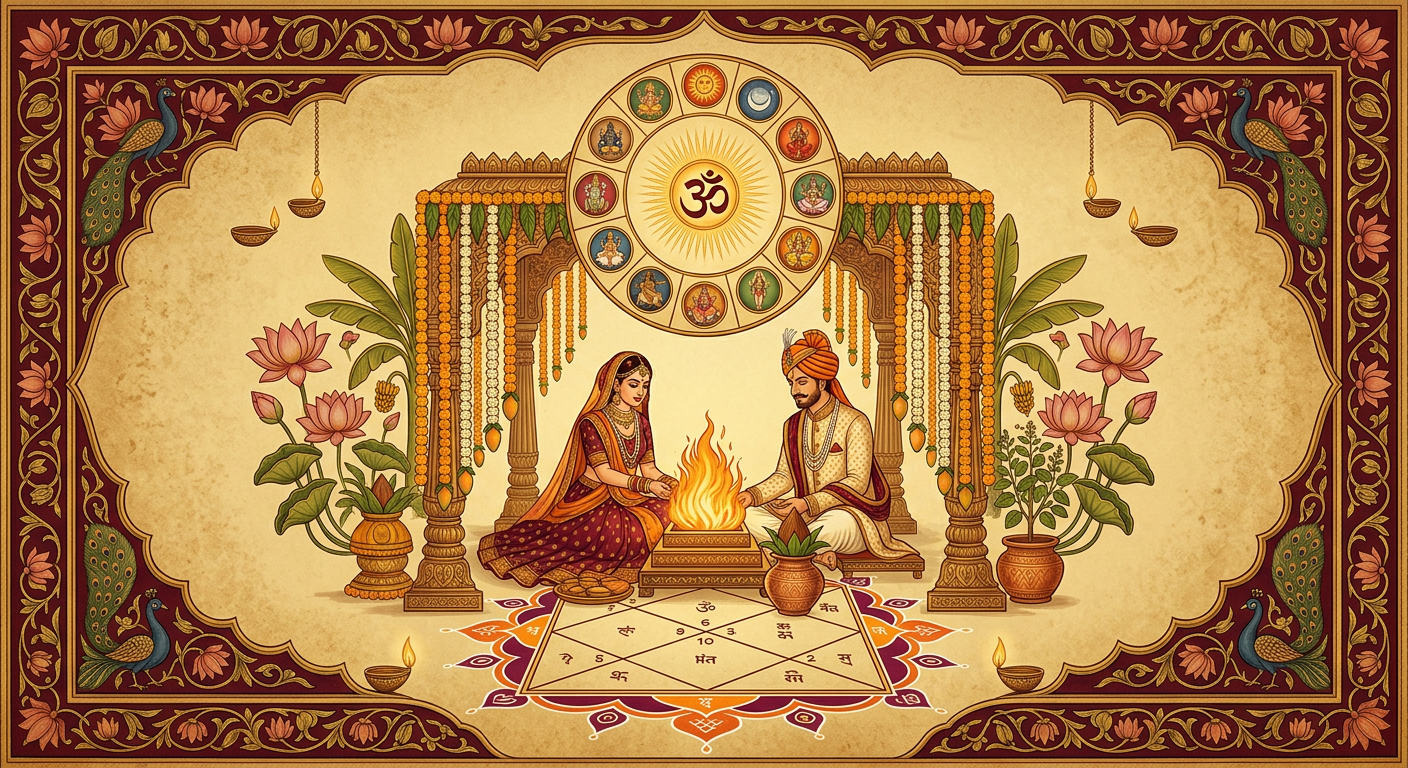
In my practice in Noida, couples often come to me feeling bewildered by the sudden rise in daily friction at home. They love each other deeply, their horoscopes matched reasonably well before marriage, and there are no catastrophic life events tearing them apart. Yet, both partners feel constantly depleted, reactive, and unable to find true comfort under their own roof. When we begin looking deeply into their charts, the root issue is rarely a lack of love. More often than not, it is rooted in unmanaged emotional fatigue, poor rest, and an unsettled Moon.
In classical Vedic thought, the Moon in Vedic astrology (Chandra) is known as the Manokaraka—the significator of the mind, emotional perception, and psychological comfort. When the Moon is stressed, either by difficult placements, harsh transits, or lifestyle imbalances, your inner emotional equilibrium falters. In a shared domestic space, two tired minds inevitably create friction over minor matters. Understanding how lunar energy shapes your daily rhythms, stress tolerance, and sleep patterns is one of the most practical ways to protect your marital harmony.
Why does the Moon govern our mental peace and daily rhythm?
The classical text Brihat Parashara Hora Shastra states, "Chandrama manaso jatah"—the Moon is born from the universal cosmic mind. While the Sun represents your soul's purpose, vital authority, and outward identity, the Moon represents your subjective, moment-to-moment experience of living. It dictates how you process sensory inputs, how safe you feel in your environment, and how quickly you recover from everyday emotional fatigue.
Because marriage is fundamentally an intimate, shared emotional ecosystem, the Moon is arguably the most sensitive planet in relationship dynamics. You can navigate a demanding professional career using your Sun and Mars, but when you return home, you drop your armor and operate entirely through your Moon sign and its nakshatra. If your lunar energy is depleted, your patience shrinks, your threshold for frustration drops, and innocent remarks from your spouse begin to sound like personal attacks.
Furthermore, the Moon controls bodily fluids, circadian rhythms, and the transition from active waking consciousness into restorative slumber. If your Moon is under strain, the nervous system struggles to downshift in the evening. Over weeks and months, this subtle imbalance accumulates into chronic domestic irritability.
How does chronic stress quietly affect harmony in married life?
When one or both partners live in a state of ongoing stress, the emotional buffer that keeps a partnership gentle begins to dissolve. I have observed that most married arguments do not happen because of philosophical disagreements; they happen between 8:00 PM and 11:30 PM, when both individuals are running on mental fumes. Emotional stress in relationships rarely stays contained within an individual's private thoughts—it spills directly into tone of voice, body language, and physical presence.
From an astrological perspective, high stress indicates that the active, rajasic planets (such as Mars and Rahu) or heavy karmic influences (such as Saturn) are overpowering the receptive, sattvic nature of the Moon. When stress becomes chronic:
- Small domestic chores turn into battlegrounds of unspoken resentment.
- Reassurance from a partner is misinterpreted as criticism or dismissiveness.
- Emotional intimacy feels like another exhausting obligation rather than a sanctuary.
- One partner begins walking on eggshells, creating emotional distance in the bedroom.
When you check your planetary positions using our free kundli tool, you can see where your Moon resides and which planetary aspects influence your emotional center. Recognizing that your spouse's short temper might simply be an exhausted nervous system under lunar strain changes how you respond to daily conflict.
What role do the 4th and 12th houses play in sleep and domestic bliss?
While the 7th house rules the marriage contract and the partner, two other houses in Vedic astrology govern the private, restorative atmosphere of married life: the 4th house and the 12th house.
The 4th house represents Sukha Sthana—the seat of inner contentment, mental peace, the domestic environment, and the emotional comfort of the home. The Moon is the natural significator (karaka) of this house. When the 4th house is supported by benefics like Jupiter or Venus, stepping inside the home feels like entering a sanctuary. However, when malefics like Rahu, Ketu, or Saturn afflict the 4th house or its lord, a person feels restless at home, finding it difficult to sit peacefully with their partner without an underlying hum of anxiety.
The 12th house is the house of Sayana Sukha (the pleasures of the bed, subconscious release, and nocturnal rest). It shows what happens when you close your eyes and surrender conscious control. A peaceful 12th house allows the mind to drift effortlessly into deep, dreamless sleep. When afflicted, the mind remains hyper-vigilant, tossing and turning, which directly ruins sleep quality in marriage.
When both the 4th and 12th houses are agitated alongside a weak Moon, a couple may find themselves sleeping in the same bed while their minds wander in completely different states of anxiety, preventing mutual rejuvenation.
How do Moon afflictions manifest in marital stress and insomnia?
In my consultations, I frequently encounter specific lunar afflictions that show up clearly in a client's sleep diary and marital patterns. An afflicted Moon does not make someone a bad partner; it simply means their mind processes tension with greater difficulty.
The influence of Rahu and Ketu on the Moon
When Rahu combines with or aspects the Moon (forming Grahan Yoga), the mind tends toward overthinking, sudden spikes of anxiety, and irrational fears about the relationship's future. Sleep becomes shallow and filled with vivid, unrestful dreams. Ketu's association with the Moon, on the other hand, creates sudden emotional withdrawal, feelings of detachment, and an inability to articulate what is causing distress, leaving the spouse feeling shut out.
The influence of Saturn on the Moon
A Moon-Saturn conjunction or mutual aspect (Vish Yoga or Sade Sati periods) introduces a heavy, melancholy tone to the emotional life. The native feels an immense burden of responsibility, often feeling unappreciated or lonely even within a loving marriage. Sleep under Saturnian strain is often delayed; the individual lies awake replaying past mistakes or worrying about tomorrow's duties.
The influence of Mars on the Moon
When Mars squares or conjoins the Moon (Chandra-Mangal Yoga in difficult houses), emotional responses become fiery, defensive, and impatient. Instead of quietly decompressing at night, the couple may engage in heated late-night debates, leaving adrenaline surging when the body ought to be resting.
Common lunar placements and their domestic impact
To help you understand how different lunar conditions reflect in day-to-day household life, I have mapped the most common configurations I observe during chart evaluations.
| Lunar Placement / Combination | Primary Emotional Pattern | Direct Impact on Sleep | Typical Effect in Marriage | Classical Mitigating Factor | Benefic Association Needed |
|---|---|---|---|---|---|
| Moon in the 6th House | Analytical worry, focus on flaws, hyper-vigilance | Broken sleep, digestive restlessness at night | Nitpicking small habits, difficulty relaxing together | Strong Lagna lord | Jupiter aspect |
| Moon in the 8th House (Chandra Ashtama) | Deep emotional vulnerability, sudden mood swings | Nocturnal anxiety, fear of unexpected problems | Unspoken insecurity, emotional intensity | Exalted disposition | Venus aspect or association |
| Moon in the 12th House | Escapism, overactive subconscious imagination | Late insomnia, waking up unrefreshed | Physical or emotional withdrawal in the bedroom | Beneficial Nakshatra | Mercury balance or Jupiter glance |
| Moon with Rahu | Catastrophizing, restless suspicion, mental racing | Irregular sleep schedule, night waking | Creating imaginary crises, feeling misunderstood | Strong Sun placement | Gentle Venusian influence |
| Moon with Saturn | Emotional dryness, feeling overburdened, self-criticism | Heavy, non-restorative sleep, early waking | Emotional silence, transactional communication | Benefic 4th house | Jupiter's aspect or waxing phase |
| Waxing Moon in the 4th House | Receptive, nurturing, peace-seeking | Deep, calm, restorative sleep | Warm domestic atmosphere, quick reconciliation | Natural benefic status | Support from Lagna lord |
How do transit cycles and lunar phases alter daily moods at home?
Because the Moon is the fastest-moving body in Vedic astrology, changing signs every two and a half days, it acts as the immediate trigger for emotional weather. Have you ever noticed that on certain days, you and your spouse can resolve a disagreement with laughter, while on other days, the exact same topic causes an intense argument?
This fluctuation is directly tied to the Gochar (transit) of the Moon relative to your birth Moon (Janma Rashi):
- Chandra Ashtama (Moon transiting the 8th house from your natal Moon): For two and a quarter days each month, your mind is particularly vulnerable. You are more prone to fatigue, misinterpretation, and low frustration tolerance. When both spouses experience difficult transits simultaneously, minor misunderstandings escalate rapidly.
- The Amavasya (New Moon) phase: During the dark half of the lunar cycle (Krishna Paksha), especially the two days preceding the New Moon, psychological energy is at its lowest ebb. The mind has less natural resilience to stress, and physical fatigue is heightened.
- The Purnima (Full Moon) phase: In the bright half (Shukla Paksha), emotions expand. While this brings vitality and romance when harmonious, it can also amplify underlying marital friction if stress has been bottled up all fortnight.
Learning to track these subtle monthly tides allows you to give your partner grace when their planetary rhythm is at a low point, rather than taking their moodiness personally.
Can balancing lunar energy improve your marital bond and sleep quality?
Yes, absolutely. In my years of guiding couples, I have seen that working intentionally with lunar energy creates an immediate, palpable difference in domestic atmosphere. You cannot always change your external workload, your financial commitments, or your in-law responsibilities overnight, but you can change how your lunar vessel receives and absorbs those pressures.
When you strengthen and soothe the Moon, your parasympathetic nervous system stabilizes. You stop viewing your partner through the lens of survival and start seeing them through the lens of companionship. Better sleep directly replenishes the brain's emotional regulation centers, making patience and affection natural rather than forced.
Addressing lunar afflictions requires a dual approach: classical planetary remedies combined with grounded, daily lifestyle adjustments that honor the body's natural cosmic clock.
Simple daily lifestyle and Vedic practices to calm an unsettled Moon
Remedies in Vedic astrology work best when they align with both spiritual discipline and practical physiology. Here are several time-tested Vedic remedies for mental peace and restorative sleep that you can easily integrate into your married life:
- Create a Sacred Evening Transition: The Moon thrives on calm rhythms. Avoid intense household discussions, financial budgeting, or emotionally charged conversations after 9:00 PM. Designate the final hour before bed as a period of mental stillness.
- Honour Water as a Lunar Element: In Vedic wisdom, pure water is sacred to Chandra. Ensure you drink sufficient clean water throughout the day, but avoid heavy consumption right before bed. Washing your feet with cool or lukewarm water before retiring grounds excessive mental heat and calms the nervous system.
- Establish a Screen-Free Bedroom: Screens emit aggressive, blue, rajasic light that severely agitates both Rahu and Mars, completely disrupting the natural melatonin production ruled by the subtle Moon. Keep the bedroom as a tranquil space dedicated exclusively to rest, conversation, and intimacy.
- Chant the Chandra Beej Mantra: If your mind races with anxiety before sleep, softly chanting the lunar mantra—"Om Shram Shreem Shrom Sah Chandramase Namah"—11 or 28 times calms the subconscious mind and invites peaceful dreams.
- Practice Gratitude Before Sleep: Before closing your eyes, exchange one genuine word of appreciation with your spouse. The Moon absorbs the last conscious thought before sleep and processes it across eight hours of subconscious digestion.
- Consider Traditional Hydration Containers: Drinking water stored in a clean silver vessel is a classical Ayurvedic and astrological method to pacify excess heat and bring tranquility to an agitated Moon.
If you find that despite your best efforts, emotional fatigue, night-time tension, and unexplained friction continue to strain your bond, it is wise to explore the specific planetary dashas and house lords at play. You are welcome to book a consultation with me, where we can look thoroughly at both birth charts in a private, supportive environment.
Frequently asked questions
How do I know if my Moon is weak or afflicted in my birth chart?
A weak or afflicted Moon often manifests as chronic overthinking, sensitivity to minor remarks, mood swings, digestive sluggishness during stress, and frequent sleep disruptions. Astrologically, this occurs when the Moon is placed in the 6th, 8th, or 12th houses, debilitated in Scorpio, in very close proximity to the Sun, or under harsh aspects from Saturn, Rahu, or Mars.
Can poor sleep between spouses cause long-term astrological damage to a marriage?
Poor sleep disrupts the 12th house (Sayana Sukha) and weakens the 4th house (Sukha Sthana), which governs household peace. While it does not alter your natal chart, prolonged sleep debt severely weakens your capacity to respond constructively to transits, turning temporary planetary friction into chronic emotional disconnect between partners.
Which gemstone is traditionally recommended for Moon-related stress?
The natural Pearl (Moti) or Moonstone is classical for strengthening lunar energy, but it should never be worn indiscriminately. If the Moon is a functional malefic for your specific Ascendant or rules difficult houses, wearing a pearl can sometimes amplify emotional volatility. Always have your birth chart assessed before adopting any gemstone.
Does sleeping in separate blankets or beds harm marital compatibility astrologically?
Astrology evaluates the energetic and emotional comfort of both partners. If temporary practical adjustments improve your physical rest and lower daily irritability, it protects the peace of the 4th house. However, maintaining close emotional connection, shared bedtime routines, and morning warmth remains essential to preserve the intimacy of the 12th house.
How does the transit of Sade Sati impact a couple's domestic peace?
Saturn's 7.5-year transit over the natal Moon puts pressure on emotional resilience, often bringing increased worldly burdens, fatigue, and a feeling of emotional dryness. When one partner is going through Sade Sati, the household requires extra patience, fewer high-pressure expectations, and deliberate efforts to maintain quiet, restorative rest.
Continue reading
Mental Peace After Marriage: Remedies That Genuinely Help
Discover practical, time-tested Vedic remedies to restore emotional calm, balance planetary friction, and cultivate lasting mental peace after marriage.
Health of the Spouse: What the 7th and 2nd Houses Hint
Discover how Vedic astrology reads your partner's physical vitality, resilience, and lifestyle tendencies using the 7th house and Bhavat Bhavam principles.
Marriage Problems and Astrological Remedies: A Complete Guide to What Actually Helps
Discover practical, authentic Vedic astrological remedies for marriage problems, addressing planetary friction, Dasha phases, and emotional harmony.
Anger, Mars and Its Impact on a Marriage
Understand how Mars influences temper and friction in married life, and discover practical Vedic methods to channel raw fiery energy into strength and harmony.
Want your specific situation analysed?
Book a private Marriage & Relationship Consultation with Dr. Rahul Singh — your charts read in detail, with a clear, confidential opinion you can act on.
Limited offer · was ₹7,500 · 60-minute consultation + detailed written analysis