18 August 2026 · Daivagya
Papasamyam: How South Indian Astrologers Balance Malefics
Learn how the South Indian technique of Papasamyam balances malefic influences between partners' charts instead of rejecting a match outright.
Quick answer
Papasamyam is a South Indian matching technique that checks whether malefic afflictions in both partners' charts are roughly balanced, rather than looking for a completely dosha-free match. If both charts carry similar malefic weight, the affliction is considered neutralised. It offers a more contextual, less rejection-driven approach to compatibility.
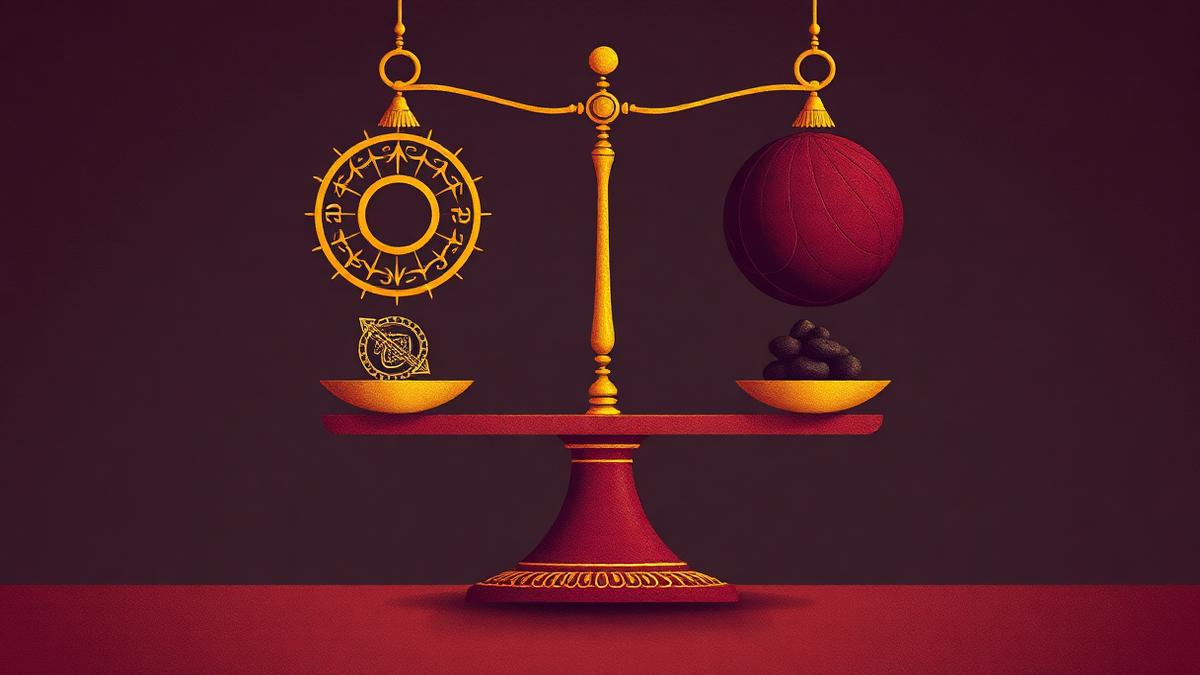
What Does Papasamyam Actually Mean?
Papasamyam comes from two Sanskrit words - "papa" meaning malefic influence, and "samyam" meaning balance or equilibrium. In my practice I have seen this term confuse a lot of North Indian families who are more familiar with straightforward dosha-cancellation rules. Papasamyam is not about erasing a malefic influence - it is about checking whether both partners carry a similar degree of affliction in their charts.
The logic is refreshingly practical. If one partner's chart has a certain level of malefic influence from planets like Mars, Saturn, or Rahu, and the other partner's chart carries a comparable level, South Indian astrologers consider the two charts to be in balance. Neither person is bringing an unmatched burden into the relationship. This is very different from simply saying "dosha present, avoid" or "dosha absent, proceed."
How Is Papasamyam Calculated?
Traditionally, this involves examining the placement of malefic planets across both charts and assigning them a rough weight based on:
- The house they occupy
- Their strength (exalted, debilitated, or neutral)
- Whether they aspect key houses like the 7th or 8th house
- Their relationship with the ascendant lord
When I sit with a couple's charts side by side, I am not just hunting for the presence of Mangal Dosha or Rahu-Ketu afflictions. I am asking a more nuanced question: does one chart carry significantly more malefic pressure than the other? If yes, that imbalance is what actually concerns me - not the mere presence of a malefic placement.
This is why in South Indian matching traditions, you will sometimes hear an astrologer say a match is acceptable "because of Papasamyam" even when both charts show some affliction. It is the comparative reading that matters, not the isolated one.
Why Does This Approach Make Sense?
I have always believed that a rigid, one-sided dosha check does not reflect real life. Every chart has some difficult placements - that is simply the nature of a birth chart with nine planets moving through twelve houses. Expecting a completely "clean" chart on either side is unrealistic, and I have seen families delay good matches for years chasing that impossible standard.
Papasamyam offers a more grounded philosophy: relationships work when both people carry comparable karmic weight, not when one person is "perfect" and the other is not. In my consultations, I often explain it like this - if both partners have faced similar intensity of challenges in their charts, they are more likely to understand and support each other through difficulties, rather than one person feeling perpetually burdened while the other sails through untouched.
How Does This Differ From North Indian Matching Methods?
North Indian Vedic matching largely relies on the Ashtakoot system - the well-known 36-guna score - along with specific dosha checks like Mangal Dosha and Nadi Dosha. The focus tends to be on individual compatibility factors scored independently, then totalled.
South Indian matching, particularly in Tamil and Telugu traditions, places more emphasis on:
| Aspect | North Indian Approach | South Indian Approach |
|---|---|---|
| Dosha handling | Individual dosha check with fixed cancellation rules | Comparative balance (Papasamyam) between both charts |
| Scoring | 36-guna Ashtakoot system | Dasha Sandhi, Rajju, and Papasamyam checks |
| Malefic view | Presence/absence based | Weighted and compared across both charts |
Neither method is superior - they are simply different lenses developed within regional astrological traditions. I always tell my clients that this is purely a matter of technique, not a reflection of which region's approach is "more correct."
Does Papasamyam Replace Other Matching Factors?
No, and this is important to understand. Papasamyam is one layer among several considerations in South Indian matching, which also includes Rajju (compatibility related to well-being and longevity), Vedha (obstruction factors), and Dina/Gana compatibility for temperament matching. I always look at the complete picture rather than relying on a single technique in isolation - no responsible astrologer should tell you a match is fine or unfit based on one factor alone.
When couples come to me confused because two different astrologers gave them conflicting verdicts, it is often because one used a strict Ashtakoot cancellation rule while the other applied Papasamyam logic. I try to explain both perspectives so they understand the "why" behind each opinion, rather than just receiving a yes or no.
What Should You Take Away From This?
If you have been told your chart has a malefic affliction and felt discouraged, I would encourage you to pause before reaching a conclusion. Malefic placements are common - what matters more is context, balance, and how they interact with your partner's chart as a whole.
In my years of practice, I have guided many couples through this exact confusion, comparing their charts using multiple regional techniques including Papasamyam, so they can make an informed decision rather than an anxious one. You can check your own chart details anytime using our free kundli tool, and if you want a detailed comparative reading with your partner's chart, I would be glad to walk you through it in a personal consultation.
Astrology, at its best, is meant to guide understanding - not create fear. Papasamyam is a good example of a technique built on realistic acceptance of imperfection, and I find that perspective valuable for anyone approaching matchmaking with an open mind.
A Final Thought on Patience
Matchmaking decisions often get rushed under family pressure, and techniques like Papasamyam remind us that a considered, comparative view usually serves couples better than a snap judgement based on one factor. I always encourage families to take the time to understand the reasoning before accepting or rejecting a match.
Continue reading
Ascendant Compatibility: Why Two Lagnas Either Click or Clash
How the Lagna, or ascendant, shapes personality and why matching two Lagnas well can decide whether a couple feels ease or friction.
Kuja Dosha in South Indian Matching: Same Dosha, Different Reading
Kuja Dosha (Mangal Dosha) is read differently in South Indian matching traditions. Here's how the interpretation changes and why it matters.
Grahan Dosh and Its Effect on Family Life
Grahan Dosh, formed by Sun or Moon with Rahu or Ketu, can shape emotional patterns and family dynamics. Here's what it means and how to work with it.
Chandal Dosh: Jupiter with Rahu and What It Does to Judgement
Chandal Dosh forms when Jupiter conjoins Rahu, often clouding judgement and wisdom. Here's how it manifests and practical ways to work with it.
Want your specific situation analysed?
Book a private Marriage & Relationship Consultation with Dr. Rahul Singh — your charts read in detail, with a clear, confidential opinion you can act on.
Limited offer · was ₹7,500 · 60-minute consultation + detailed written analysis