7 October 2026 · Daivagya
Karwa Chauth 2026 (29 October): The Astrology Behind the Vrat and What It Means for Your Marriage
Discover the deep astrological significance of Karwa Chauth 2026 on 29 October, the cosmic influence of the Moon, and how this sacred fast supports marriage.
Quick answer
Karwa Chauth 2026 falls on 29 October, aligning the Kartik Krishna Chaturthi lunar energy with marital harmony. Astrologically, the fast balances lunar emotions, energizes the eighth house of marital longevity, and harmonizes planetary transits between spouses. Performing the rituals with conscious astrological awareness enhances emotional bonding, clears minor planetary frictions, and deepens mutual commitment.
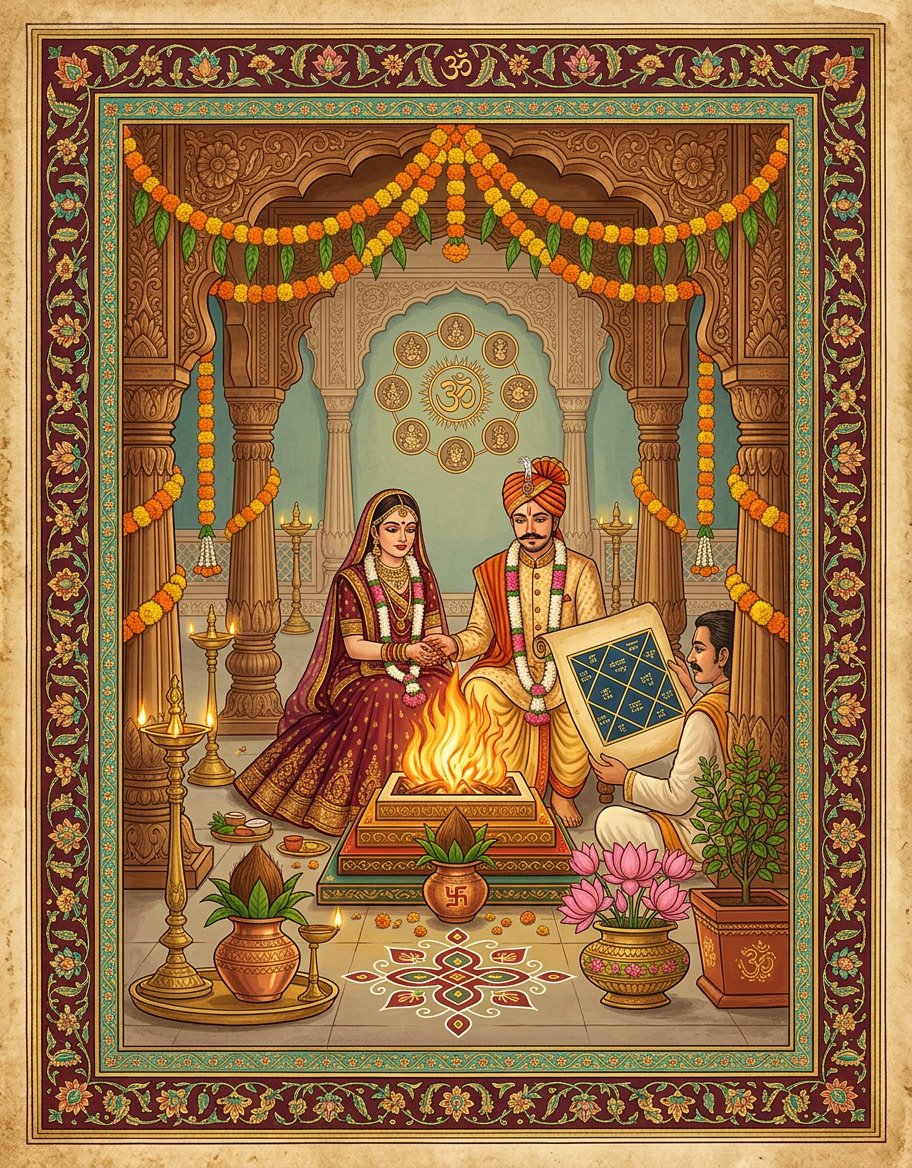
Every autumn in North India, as the post-monsoon skies clear into a crisp evening blue, families begin preparing for one of the most emotionally charged days of the Vedic calendar. In my practice at Daivagya in Noida, as the month of Kartik approaches, I frequently meet couples asking about the deeper spiritual and planetary mechanics of Karwa Chauth. Some view it purely through the lens of cultural tradition, while others wonder if there is an authentic astrological framework behind fasting from sunrise to moonrise.
There is, in fact, profound planetary science embedded in this ritual. Karwa Chauth is not merely an act of austerity; it is a sophisticated synchronization of personal intention with the lunar cycle, specifically designed to protect the longevity of the marital bond and soothe emotional friction between partners. Understanding the Karwa Chauth 2026 astrological significance allows you to move past rote ritualism and tap into the real planetary energies at play on Thursday, 29 October 2026.
Why is Karwa Chauth observed on Kartik Krishna Chaturthi?
To understand the festival, you must first look at the Vedic lunar calendar (the Panchang). Karwa Chauth is celebrated on the Chaturthi (fourth lunar day) of the Krishna Paksha (waning fortnight) in the month of Kartik (according to the Purnimanta system followed across Northern India).
In Vedic astrology, the fourth tithi of any lunar month is ruled by Lord Ganesha, the remover of obstacles (Vighnaharta). When a marriage encounters subtle misunderstandings, ego clashes, or energetic blockages, Lord Ganesha’s stabilizing energy helps dissolve those impediments. Furthermore, the waning Moon during Krishna Paksha represents a time when the external pulls of the mind begin to turn inward. By observing a Nirjala (waterless) fast on this specific tithi, the physical senses are quieted, directing all emotional and spiritual focus toward the preservation and health of the spouse.
Kartik itself is ruled by the cosmic preservation energies of Lord Vishnu and Goddess Lakshmi, while the presence of Goddess Parvati (as Karwa Mata or Chauth Mata) provides the ultimate archetype of marital devotion (Pativrata and Saubhagya). The day creates a rare confluence where spiritual discipline directly nourishes the domestic sphere.
What is the planetary backdrop for Karwa Chauth 2026?
On 29 October 2026, Karwa Chauth falls on a Thursday—a weekday ruled by Jupiter (Guru). In Vedic astrology, Jupiter is the prime indicator (Karaka) of grace, wisdom, marital stability, and husbandly longevity in a woman's chart. When Karwa Chauth occurs on a Thursday, the day receives an added layer of benevolent, protective energy that reinforces dharmic marital vows.
During this time of the year, the Sun is transiting its debilitation sign of Libra (Tula), the seventh sign of the natural zodiac. Libra governs relationships, balance, and partnership. When the Sun—representing the soul and the ego—is in Libra, human relationships require extra care, mutual humility, and conscious effort. The fast acts as a conscious sublimation of individual ego for the collective welfare of the union.
Meanwhile, the Moon will be making its transit through the late degrees of Taurus (Vrishabha) or early Gemini (Mithuna), passing through the nakshatras that govern nourishment and sensory connection. The celestial balance on this day encourages emotional grounding, making it an opportune moment to heal subtle domestic tensions that may have gathered over the year.
How does the Moon connect to emotional bonding and marital longevity?
In Vedic astrology, the Moon (Chandra) is the ruler of the mind (Manas), moods, psychological security, and water elements in the human body. The classical text Brihat Parashara Hora Shastra notes: "Chandrama Manaso Jatah"—the Moon is born from the universal mind. In any marital horoscope, the strength and disposition of the Moon determine how two people process emotions, communicate without words, and offer empathy to one another.
During a complete waterless fast, your physical body experiences a brief reduction of the water element (Jala Tattva). When the fast is broken only after seeing the Moon through a sieve (Chhalni) and offering Arghya (water offering), a powerful psychological and subtle-energetic reset occurs:
- Sublimation of Restlessness: Fasting calms an agitated Moon in the natal chart, steadying emotional reactivity.
- Filtering Perceptions: Viewing the Moon through a sieve symbolically filters out negative impressions, grievances, and critical judgments you may have harbored toward your spouse.
- Receiving Lunar Rays: Offering water directly to the rising Moon realigns the mind with calmness, patience, and receptivity.
When a wife looks at her husband through the same sieve immediately after gazing upon the Moon, the ritual symbolically overlays the calm, nurturing, and pure qualities of the Moon onto her partner. It is a visual affirmation of seeing the divine and peaceful aspect of the spouse, transcending daily trivial arguments.
What do the 7th and 8th houses reveal during marital fasting rituals?
When analyzing horoscopes for marriage guidance, astrologers do not look solely at the 7th house. While the 7th house (Kalatra Bhava) indicates the partner, attraction, and day-to-day dynamic, the 8th house (Mangalya Sthana in a female chart) is equally vital.
The 8th house governs the longevity of the marital bond, the health of the spouse, mutual trust, and the unexpressed karmic ties between two individuals. Fasting on Karwa Chauth is fundamentally a protective remedy for the 8th house. In traditional parlance, it is an austerity to fortify Akhand Saubhagya (unbroken marital grace).
| House in Birth Chart | Marital Dimension Governed | How Karwa Chauth Influences This Energy |
|---|---|---|
| 2nd House (Kutumba) | Family harmony, speech, mutual resources | Promotes gentle speech and family cohesion through collective celebration. |
| 4th House (Sukha) | Domestic peace, emotional contentment | Stabilizes home atmosphere by clearing negative psychological vibrations. |
| 7th House (Jaya/Kalatra) | Spouse, mutual attraction, partnership | Rekindles romantic appreciation and mutual respect between partners. |
| 8th House (Mangalya) | Longevity of the marriage, partner's vitality | Offers energetic protection against unforeseen crises and strengthens longevity. |
If you have malefic influences impacting your 8th or 7th house—such as Saturn's heavy gaze or Rahu's confusion—observing this annual day of focused prayer acts as a traditional buffer. You can check your planetary placements using our free kundli tool to see which houses govern your relationship dynamics.
How the primary planets shape the Karwa Chauth experience
Every ritual element of Karwa Chauth aligns with a planetary principle. When you prepare the puja thali, decorate your hands with henna, or listen to the Karwa Mata Vrat Katha, you are engaging a complete planetary mandala.
1. Venus (Shukra) — Love, Aesthetics, and Devotion
Venus rules romance, beauty, fine garments, and the joy of union. On Karwa Chauth, women dress in vibrant red, maroon, or auspicious festive colors, apply mehendi (henna), and wear traditional jewelry (Solah Shringar). This deliberate enhancement of beauty stimulates Venusian energy in the household, dispelling dullness and re-energizing mutual attraction.
2. Jupiter (Brihaspati) — Blessings, Wisdom, and Tradition
Jupiter represents the blessings of elders, the sanctity of traditional vows, and moral alignment. The ritual exchange of the Baya (gifts given by the daughter-in-law to her mother-in-law) and touching the feet of elders after the Moon sighting activates Jupiter’s protective shield. It harmonizes inter-generational relationships within the family.
3. Mars (Mangal) — Marital Auspiciousness (Sindoor and Kumkum)
Mars, when positive, is the protector of energy and courage. The application of vermillion (sindoor) and red bangles invokes the auspicious side of Mars (Mangalya), counterbalancing potential aggressive tendencies or anger between partners.
4. The Moon (Chandra) — Mental Peace and Unconditional Connection
The central focal point of the evening remains the Moon. By aligning your prayers with the lunar cycle, you invite quiet resilience into the emotional fabric of your marriage.
Why are the evening puja muhurat and Chandra darshan timing so critical?
In Vedic electional astrology (Muhurat Shastra), timing is everything. A ritual performed during an auspicious window yields significantly stronger mental and energetic results because the macrocosm (planetary transits) aligns harmoniously with the microcosm (your actions).
For Karwa Chauth puja muhurat on 29 October 2026, the evening worship dedicated to Goddess Parvati, Lord Shiva, Lord Kartikeya, and Lord Ganesha should ideally be conducted during Pradosh Kaal—the twilight window extending approximately two hours and twenty-four minutes after sunset.
During Pradosh Kaal, the atmosphere carries a peaceful, Sattvic quality. The mind is receptive, and prayers made for the family’s well-being are believed to be deeply effective.
Following the puja, waiting for Chandra Darshan (the rising and visible sighting of the Moon) requires patience. Depending on your geographical location in India or abroad, the Moonrise timing on 29 October 2026 will generally fall between 8:00 PM and 8:45 PM. It is essential not to rush the Arghya; the Moon must be clearly visible above the horizon before you offer the water mixed with raw milk, akshat (unbroken rice), and kumkum.
Can fasting genuinely remedy marital discord in a chart?
In my consultations, I often encounter honest skepticism: "Doctor, can staying hungry for a single day really solve my marital problems?"
My answer is always grounded and honest. Astrological rituals are not magical erasers for deep behavioral issues, incompatibility, or lack of mutual communication. If two people refuse to respect each other or address fundamental lifestyle differences, a single fast cannot fix those foundational fractures.
However, what fasting does achieve is an energetic and psychological recalibration. In Vedic thought, a Vrat is an act of Sankalpa (conscious intent) and Tapas (constructive discipline). When you willingly embrace discomfort for the well-being of another human being, several profound shifts occur:
- It softens personal ego and self-centered habits.
- It communicates deep care to your partner in a tangible, sacred language.
- It generates positive karma (Punya) through self-restraint and devotion.
- It aligns your collective consciousness with higher dharmic values.
Fasting works as one part of a comprehensive approach to planetary remedies for married life. When combined with mutual effort, patience, and realistic understanding of each other's natal charts, the spiritual merit accrued during Karwa Chauth creates an aura of protection around the home.
How husbands can actively participate in the astrological spirit of the day
Traditionally, Karwa Chauth was observed primarily by women. In modern times, the spirit of the vrat has evolved into a shared celebration of mutual longevity and respect. More husbands today choose to fast alongside their wives or actively assist in every stage of the evening’s preparations.
From an astrological perspective, this mutual participation is exceptionally beneficial:
- Balancing the Solar and Lunar Polarities: When both partners honor the day, the Sun (representing masculine vitality and soul) and the Moon (representing feminine intuition and mind) achieve energetic equilibrium within the home.
- Soothing 7th House Afflictions: If the husband's chart shows an afflicted 7th house (such as the presence of Mars or Rahu), his supportive, gentle, and appreciative behavior on this sacred day directly mitigates aggressive planetary traits.
- Practical Appreciation: Breaking the fast together, offering the first sip of water with genuine gratitude, and acknowledging the partner's sacrifices transforms a cultural obligation into a profound memory of mutual love.
Practical steps for observing Karwa Chauth with astrological intent
If you are planning to observe Karwa Chauth 2026, I recommend incorporating these mindful practices to maximize the spiritual and astrological benefits of your fast:
- Begin with a Calm Sargi (Pre-Dawn Meal): The Sargi, traditionally prepared or gifted by the mother-in-law, should be eaten during Brahma Muhurta (roughly an hour and a half before sunrise). Include nourishing foods like fresh fruits, soaked almonds, coconut water, and milk sweets to sustain physical vitality throughout the day without lethargy.
- Establish a Clear Sankalpa: When you begin the fast at sunrise, pause for a moment before your home altar. Silently state your intention: not merely for external prosperity, but for emotional patience, health, clarity of speech, and longevity for both yourself and your spouse.
- Listen Mindfully to the Vrat Katha: The traditional story of Queen Veeravati reminds us of the perils of impatience, deceit (even out of affection), and breaking sacred rules prematurely. Reflect on how patience and honesty protect real-world relationships.
- Offer Arghya with Sacred Ingredients: When preparing your brass or silver lota for the Moon, use clean water, a few drops of raw milk, white flowers, unbroken grains of rice (akshat), and a pinch of sugar. Silver is ruled by the Moon, making a silver vessel especially auspicious if available.
- Conclude with Elder Blessings: Never skip seeking the physical blessings of the elders in your household after the fast is completed. The positive vibrations received from elders act as an invisible armor for the family's Kutumba Bhava (2nd house).
If your marriage is currently navigating a period of turbulence, confusion, or transit-related strain, an individual astrological assessment can help illuminate the specific planetary cycles (Dashas) currently active. You can book a consultation with me for an in-depth, confidential analysis of both horoscopes.
Frequently asked questions
What should I do if the Moon is not visible due to cloudy skies on Karwa Chauth 2026?
If clouds obstruct the Moon at the calculated moonrise time, consult your local panchang for the exact astronomical rising hour. You may perform the Arghya and conclude the ritual by facing the exact direction of the Moon (East-Northeast), visualizing Lord Chandra’s presence, or offering prayers to the Moon situated in Lord Shiva’s matted locks.
Can an unmarried woman observe Karwa Chauth for her fiancé?
Yes, engaged women often observe the fast for their prospective partners. Astrologically, since the formal marital bond (the 7th house connection) is finalized during the Saptapadi, an unmarried woman may conclude her fast after viewing the evening star or the Moon, focusing her prayers on a harmonious future union.
Which colors are considered most auspicious to wear on Karwa Chauth?
Traditional shades of red, maroon, auspicious pink, orange, and golden yellow are highly recommended. These colors resonate with the energies of Mars, Jupiter, and the Sun, promoting vitality and marital joy. Dark blue, black, and dull grey tones should be avoided during this specific auspicious ritual.
What if a pregnant or nursing woman cannot keep a strict Nirjala fast?
Vedic traditions prioritize health and life (Prana Raksha) above rigid austerities. A pregnant or nursing woman can observe a modified fast by consuming milk, fruits, and water after consulting her family and doctor. Astrological merit lies in the sincerity of the intention (Bhava), not in physical harm.
How does Karwa Chauth help if one spouse is running a difficult Dasha?
During challenging Dasha periods (such as Rahu or Saturn influencing the 7th or 8th house), the mind often experiences anxiety, irritability, and relationship fatigue. The disciplined prayer, family support, and lunar worship on Karwa Chauth steady the psychological field, helping reduce unnecessary conflicts during stressful transits.
Continue reading
Diet and Planetary Balance: An Ayurvedic-Astrological View
Discover how Vedic astrology and Ayurveda unite to balance planetary energies, nourish digestion, and cultivate vitality through conscious, elemental eating.
Mental Peace After Marriage: Remedies That Genuinely Help
Discover practical, time-tested Vedic remedies to restore emotional calm, balance planetary friction, and cultivate lasting mental peace after marriage.
Navratri 2026 Remedies for Those Seeking a Life Partner (11-20 October)
Discover authentic Vedic remedies during Sharad Navratri 2026 (11-20 October) to remove marriage delays, balance key planetary energies, and attract a life partner.
Marriage Problems and Astrological Remedies: A Complete Guide to What Actually Helps
Discover practical, authentic Vedic astrological remedies for marriage problems, addressing planetary friction, Dasha phases, and emotional harmony.
New here? Start with the full guide to Vivah Muhurat: Choosing the Right Wedding Date, or try the free kundli tool.
Want your specific situation analysed?
Book a private Marriage & Relationship Consultation with Dr. Rahul Singh — your charts read in detail, with a clear, confidential opinion you can act on.
Limited offer · was ₹7,500 · 60-minute consultation + detailed written analysis