6 November 2026 · Daivagya
Diwali Week 2026 Day by Day: Dhanteras to Bhai Dooj Puja Guide for Couples
Discover how couples can observe Diwali week 2026 together. Day-by-day rituals, auspicious muhurats, and Vedic astrology remedies for lasting marital harmony.
Quick answer
Celebrating the five days of Diwali as a couple strengthens marital compatibility, mutual prosperity, and domestic peace. This guide outlines the day-by-day rituals from Dhanteras to Bhai Dooj for 2026, offering clear timings, directional rules, and Vedic remedies to harmonize planetary influences across your shared household.
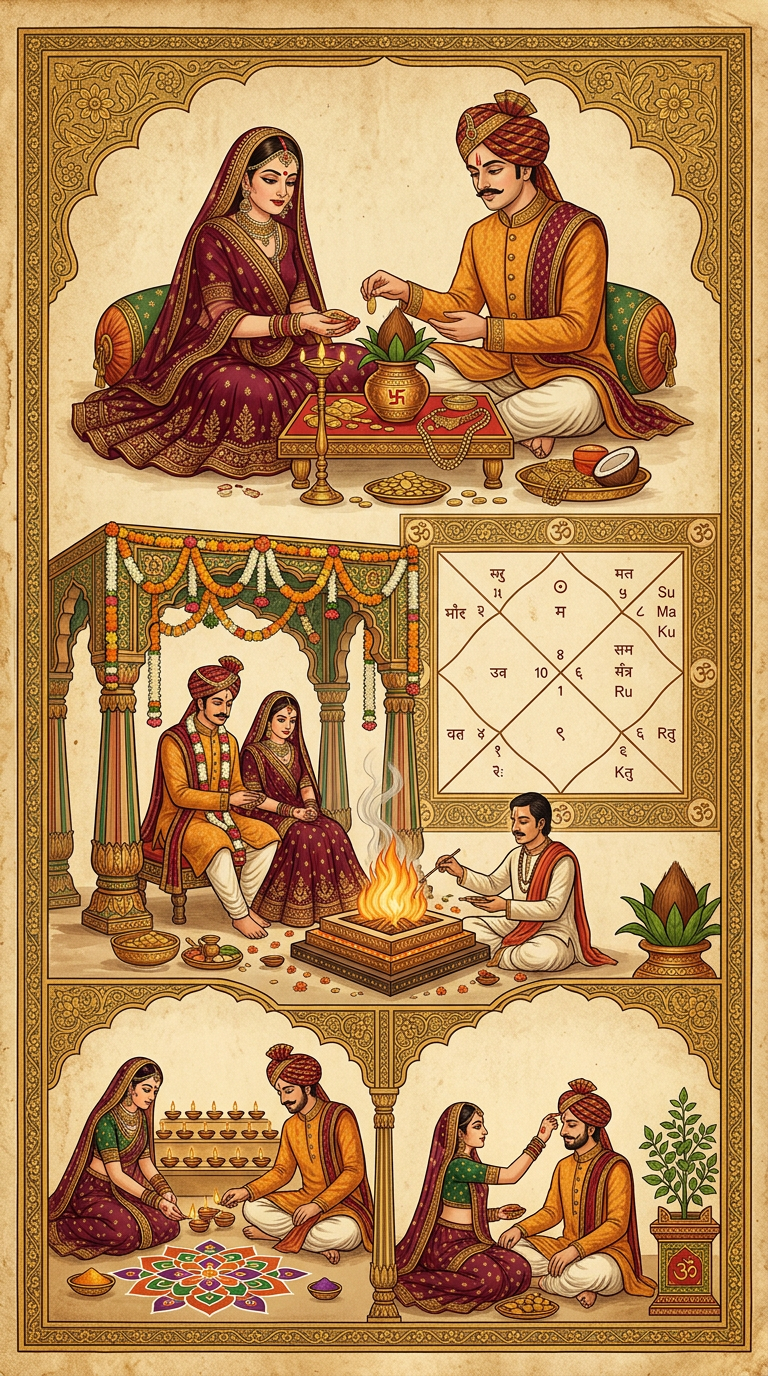
In my Vedic astrology practice in Noida, I often remind couples that festivals are not merely cultural holidays. They are potent cosmic windows where planetary alignments, solar-lunar transits, and traditional rituals converge to refresh the energy of your home. The five days of Deepawali represent the most transformative festive period in the Vedic calendar.
When a husband and wife sit together for prayer with a unified intent, the spiritual impact is doubled. In Vedic philosophy, a householder’s spiritual practice is incomplete without their partner. Participating jointly in Diwali puja for couples aligns your shared 2nd house of accumulated wealth, the 4th house of domestic peace, and the 7th house of marital partnership.
Whether you are newly married or have shared a home for decades, observing these five sacred days with clarity and conscious intention brings stability to your bond. Here is your day-by-day couple’s guide for Diwali week 2026, structured according to authentic Vedic principles.
Why should couples perform Diwali week rituals together?
In the Vedic tradition, a married couple is regarded as Dampati—two individuals bound into a single energetic unit for spiritual and worldly duties. Ancient texts specify that major prosperity and peace rituals yield their full fruit only when performed jointly. When you perform rituals side by side, your individual planetary strengths support each other, helping to balance any temporary transit challenges in your horoscopes.
From an astrological perspective, Diwali occurs during the Sun’s transit through Libra (Tula rashi), its sign of debilitation. The Sun represents the soul and vitality, while Libra is ruled by Venus (Shukra), the planet of partnership, romance, and marriage. Because the Sun's solo ego is humbled in Libra, collaborative energy becomes essential.
By performing sacred rituals together, couples strengthen Venus and Jupiter simultaneously. This softens friction, clears accumulated domestic stress, and establishes a stable foundation for financial growth. You can examine your own planetary placements using our free kundli tool to understand which houses benefit most during this festive window.
What are the exact dates for Diwali week 2026?
Diwali 2026 falls in early November. Planning your schedule in advance ensures you do not rush through preparations, allowing you to observe each ritual during its ideal astrological window (Shubh Muhurat).
| Festival Day | Tithi & Sacred Occasion | Date (2026) | Primary Astrological Focus |
|---|---|---|---|
| Day 1 | Kartik Krishna Trayodashi (Dhanteras) | Friday, November 6, 2026 | Health, Longevity & 2nd House Prosperity |
| Day 2 | Kartik Krishna Chaturdashi (Narak Chaturdashi) | Saturday, November 7, 2026 | Cleansing Negative Energies & Rahu Calming |
| Day 3 | Kartik Amavasya (Lakshmi-Ganesh Puja) | Sunday, November 8, 2026 | Venus-Mercury Harmony & Family Wealth |
| Day 4 | Kartik Shukla Pratipada (Govardhan Puja) | Monday, November 9, 2026 | Grounding, Nourishment & Mutual Respect |
| Day 5 | Kartik Shukla Dwitiya (Bhai Dooj / Yama Dwitiya) | Tuesday, November 10, 2026 | Kinship Harmony & Protection of Lineage |
Day 1: How should couples observe Dhanteras for shared prosperity?
Dhanteras marks the appearance of Lord Dhanvantari, the divine physician, as well as the worship of Lord Kubera and Goddess Lakshmi. For couples, Dhanteras rituals for married life should focus equally on physical well-being and material stability. Wealth has little meaning without health and peace of mind.
Begin your morning by tidying the northeast (Ishanya) and north sectors of your home. Astrologically, the north is governed by Mercury and Lord Kubera, while the northeast is guided by Jupiter. Keeping these areas pristine allows positive energetic flow into your joint financial affairs.
During the evening Pradosh Kaal, go together to purchase something meaningful for the home. While gold, silver, or brass utensils are traditional, the intention behind the purchase is what matters most. Avoid buying sharp iron objects, knives, or dark synthetic items on this day, as these carry Rahu and Saturn vibrations that disrupt peaceful domestic energy.
Later in the evening, perform the essential Yamadeepdaan. The wife and husband should light a four-wick mustard oil lamp (Chowmukhi Diya) made of kneaded flour or clay. Place it outside your main entrance facing south—the direction of Lord Yama. This traditional ritual offers protection to the family and safeguards the longevity (Ayushya) of both partners.
Day 2: What is the spiritual significance of Chhoti Diwali for domestic harmony?
Chhoti Diwali, also known as Narak Chaturdashi or Roop Chaudas, is dedicated to purification and clearing psychic heaviness. Over months of routine work, misunderstandings and unspoken irritations can accumulate between partners. This day provides a conscious opportunity to clear those subtle blockages.
Traditionally, couples observe Abhyanga Snan (an auspicious herbal oil bath) before sunrise. Prepare sesame oil infused with a pinch of turmeric and sandalwood powder. Applying this oil to each other’s forearms or shoulders before bathing calms Mars and Rahu energies, which are often responsible for sudden temper flare-ups and impatience.
In the evening, light 14 small earthen lamps filled with mustard oil. Place them along the perimeter of your home, near water sources, and around the corners of your kitchen and balcony. This dispels stagnant energy and prepares your living space for the arrival of Mahalakshmi on the following evening.
Take time on this day to forgive minor past grievances. I often tell couples in my Noida chambers that an unburdened mind is the most welcoming altar you can offer to divine energies during Diwali week.
Day 3: How should a husband and wife perform Badi Diwali Lakshmi-Ganesh Puja?
Badi Diwali is the spiritual peak of the festival. On this sacred night of Kartik Amavasya, the combined worship of Lord Ganesha, Goddess Lakshmi, and Goddess Saraswati balances wisdom, material grace, and conscious speech within the household.
To observe an authentic Lakshmi Puja muhurat for couples, plan for the Pradosh Kaal—the period of approximately two hours and twenty-four minutes following sunset. Fixed ascendant signs (Sthir Lagna) such as Taurus (Vrishabha Lagna) during this window are ideal because they anchor wealth and marital stability permanently within your home.
Here is a practical step-by-step framework for performing the main puja together:
- Seating Alignment: The husband traditionally sits on the right side and the wife on the left during auspicious invocations and blessings (Deva Karya). Both partners should face east or north.
- Joint Sankalp: Take a small amount of clean water, unbroken rice grains (Akshat), and a flower in your right hands. State your names, family lineage (Gotra), and your shared intention for mutual peace, health, and ethical prosperity.
- Invocation of Ganesha: Offer Durva grass and modak to Lord Ganesha to eliminate obstacles in your communication and family ventures.
- Worship of Mahalakshmi: Offer red lotus flowers, fresh batashas, and fragrant white sweets to Goddess Lakshmi. Chant the Shree Suktam or a simple Lakshmi mantra together in unison.
- Lighting the Mahadeep: Light a large brass or clay ghee lamp that will remain illuminated throughout the night. Place it near your prayer altar as a beacon of enduring positivity.
After the puja, share the offered prasad with each other first before distributing it to family and neighbors. This simple act seals your mutual commitment to share all blessings equally.
Day 4: Why is Govardhan Puja essential for gratitude and grounding the household?
Govardhan Puja, celebrated on the day following Diwali, is deeply rooted in nature, nourishment, and humility. Astrologically, this day connects with the Moon and the Earth element, bringing stability to emotions and grounding erratic thoughts after days of bustling activity.
Couples should use this day to express gratitude for the resources supporting their lives. Many households prepare Annakut—a collection of varied vegetarian preparations, grains, and sweets offered in gratitude to the divine. Preparing a meal together on this day fosters teamwork and mutual appreciation.
If you have a home garden or sacred plants like Tulsi, worship them together in the morning by offering clean water, chandan, and a ghee lamp. Reflect on how you can better support one another’s personal and spiritual growth throughout the coming year. When husband and wife honor the everyday blessings of life together, they strengthen Jupiter's grace across their household.
Day 5: How does Bhai Dooj and Yama Dwitiya nurture extended family ties?
The final day of the festive cycle is celebrated as Bhai Dooj or Yama Dwitiya. While widely known as a celebration of the sibling bond, its astrological meaning extends to harmonizing relationships with in-laws and extended family.
A marriage does not exist in isolation; it thrives within a broader web of family relationships. On Yama Dwitiya, respecting and honoring brothers, sisters, and in-laws stabilizes the 3rd house (communication and siblings) and the 11th house (social networks and broader gains) in your birth chart.
When a couple visits family with warmth, gifts, and genuine goodwill, they clear lingering awkwardness or historical friction. Generosity and joyful family interactions on this day balance the fiery influence of the Sun, transmuting it into respectful, cooperative warmth.
Which planetary energies get strengthened during these five days?
Each day of Diwali week corresponds to specific planetary vibrations. When you observe these days mindfully, you apply subtle remedies across multiple areas of your life:
- Venus (Shukra): Strengthened through cleanliness, light, floral decor, and mutual affection during Lakshmi Puja. Venus governs marital harmony, aesthetic pleasure, and relationship longevity.
- Jupiter (Guru): Enhanced through the chanting of sacred mantras, ethical intentions, and gratitude rituals on Dhanteras and Govardhan Puja.
- Mercury (Budha): Nourished through accounts blessing, balanced speech, and gifts given throughout the week. Mercury governs clear, conflict-free communication between partners.
- Mars (Mangal) & Saturn (Shani): Calmed through oil lamps, charity, and early morning Abhyanga Snan, reducing harshness and irritability in domestic routines.
By intentionally engaging in these Vedic rituals for marital harmony, you correct energetic imbalances without needing complicated rituals.
What common mistakes should couples avoid during Diwali week?
Over my years of consulting, I have seen couples inadvertently bring tension into what should be an uplifting period. Keep these simple points in mind:
- Avoid arguments during puja preparations: Rushing to clean or cook under stress often leads to sharp words. A simple, peaceful puja performed with love is far more auspicious than an elaborate ceremony conducted amidst friction.
- Do not leave the main door in darkness: Ensure your entrance is brightly lit and clean throughout all five evenings. The doorway represents the welcoming point for life-force energy (Prana).
- Avoid financial disputes on Dhanteras and Diwali: Do not discuss debts, household financial arguments, or past monetary mistakes during these days. Focus entirely on gratitude and future prosperity.
- Do not discard old religious items carelessly: If you are replacing idols or sacred images, immerse the older ones respectfully in clean running water or place them under a sacred tree rather than throwing them out with regular waste.
How can you align festival remedies with your individual birth charts?
While generalized festival rituals bring peace to every home, your personal horoscope highlights unique planetary periods (Dashas) and transits. For instance, if one partner is navigating a challenging Saturn transit (Sade Sati) or a testing Rahu Mahadasha, certain customized modifications—such as specific daan (charitable offerings) or personalized mantra counts—can provide targeted relief.
Understanding your mutual planetary dynamics allows you to celebrate festivals with deeper insight. If you are experiencing persistent domestic friction or seeking guidance on auspicious timing for major family decisions, feel free to book a consultation with me for an in-depth, personalized chart reading.
May this Diwali week in 2026 bring enduring peace, good health, and mutual prosperity to you and your home.
Frequently asked questions
Can a couple perform Lakshmi Puja if one partner is away travelling?
Yes. If your spouse is travelling for work, the partner at home should place a clean supari or photograph representing their spouse on their left side on the puja aasan. Take the sankalp on behalf of both of you, visualizing their presence, and complete the prayers with a focused mind.
Which direction should a couple face while performing Diwali Puja?
Couples should ideally face either east or north during the puja. Facing east enhances health, spiritual awareness, and clarity of mind, while facing north attracts financial stability, career growth, and the grace of Lord Kubera and Goddess Lakshmi into the household.
What should we do if our gotra is unknown during the joint Sankalp?
If you do not know your Vedic gotra, you can comfortably use Kashyapa Gotra for the sankalp, as Sage Kashyapa is traditionally regarded as the universal ancestor in Vedic rituals. Alternatively, simply state your full names with sincerity; genuine devotion always supersedes technical formalisms.
Is it necessary to buy expensive gold or silver on Dhanteras?
No, it is not mandatory. The essence of Dhanteras lies in inviting positive energy and respecting resources. Purchasing simple brass utensils, raw whole coriander seeds (Dhania), or a small clay idol for Diwali puja with devotion carries the exact same spiritual and astrological merit as precious metals.
Continue reading
Malefic Saturn in a Marriage Chart: Delays, Coldness and How to Ease Them
Understand how a malefic Saturn influences marriage timing and emotional warmth in your Kundli, along with practical Vedic remedies to ease its heaviness.
Debilitated Venus in Virgo: How It Affects Love, Attraction and Married Life
Discover how debilitated Venus in Virgo impacts love, romantic attraction, and marriage, along with cancellation rules, nakshatra effects, and practical remedies.
How Malefic Venus Can Cause a Bad Relationship and Married Life: Signs and Remedies
Discover how an afflicted or malefic Venus impacts marital harmony, recognizable behavioral signs in relationships, and practical Vedic remedies to restore warmth.
Vastu for the Bedroom: Small Changes That Ease Marital Tension
Practical, no-renovation Vastu fixes for the bedroom that can ease everyday tension between spouses.
Want your specific situation analysed?
Book a private Marriage & Relationship Consultation with Dr. Rahul Singh — your charts read in detail, with a clear, confidential opinion you can act on.
Limited offer · was ₹15,000 · One-time payment · 60-minute personal consultation